Radon Kit: What Homeowners Need to Know
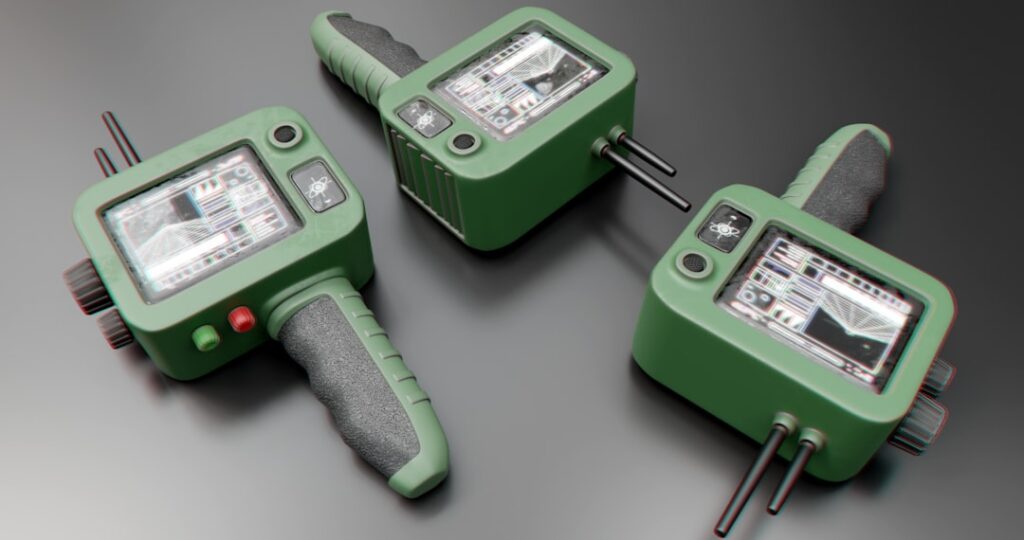
A radon kit is a consumer-grade or professional measurement device used to determine the concentration of radon gas in indoor air, with results expressed in picocuries per liter (pCi/L). Several kit categories exist: short-term charcoal canister kits, long-term alpha-track detectors, electret ion chambers, and continuous radon monitors. Each has different cost, accuracy, deployment time, and use case. This guide summarizes EPA, CDC, and CDPHE guidance current as of 2026 on how each kit works, when to use which, and how to interpret results. Consult a physician about respiratory health concerns and a certified radon professional for mitigation decisions when results exceed action levels.
What is a radon kit?
A radon kit is any product designed to measure indoor radon concentration in a defined volume of air over a defined time period. The most common consumer kits use a sealed container of activated charcoal that adsorbs radon over 2 to 7 days, then is sealed and shipped to a lab for gamma-spectroscopy analysis. Longer-term consumer kits use a plastic film (alpha-track) or a charged disk (electret) that records cumulative radon exposure over 90 days to a year. Continuous monitors are digital devices that report hour-by-hour readings without lab analysis. The result of any kit is a numerical concentration to compare against the EPA action level of 4 pCi/L.
The broader question of how radon testing fits into a homeowner’s risk-management approach sits on the radon testing pillar for Colorado Front Range homeowners.
Types of radon kit
Charcoal canister kit
The most common DIY radon kit. A small sealed metal or plastic canister containing activated charcoal is unsealed and placed in the lowest livable level of the home under closed-house conditions. After 2 to 7 days the canister is re-sealed and shipped to a lab. The lab measures the gamma radiation emitted by radon decay products adsorbed in the charcoal and calculates the average concentration during the exposure period. Cost runs $15 to $40 retail plus lab fees (often included in the kit price). Best for an initial quick test of an unknown home.
Alpha-track detector kit
A small plastic device containing a strip of polymer film that records alpha-particle impacts from radon decay. Deployed for 90 days to a full year, then shipped to a lab where the film is etched and counted under a microscope. Alpha-track kits give the most accurate annual-average reading and are EPA-recommended for follow-up after a borderline short-term result. Cost runs $25 to $50 plus lab analysis.
Electret ion chamber kit
A small chamber containing an electrostatically charged disk. Radon ionization gradually discharges the electret; the rate of discharge is proportional to radon concentration. Electrets are available in short-term (2 to 7 days) and long-term (1 to 12 months) formats. Cost runs $40 to $100 plus lab analysis. Less common in consumer markets than charcoal or alpha-track but used widely by professional measurement firms.
Continuous radon monitor (CRM)
A digital device that reports radon concentration on an internal display, often with hourly data logging, tamper detection, and connectivity to a phone app. Consumer CRMs like the Corentium Home, AirThings Wave Plus, and RadonEye run $130 to $250 retail. Professional-grade CRMs used by certified inspectors cost $1,000+ and are the standard for real-estate transaction testing. CRMs do not require lab analysis.
Which kit to use when
Three scenarios drive most kit choices:
Initial unknown home test
A short-term charcoal canister kit is the fastest and cheapest first test. Deploy for 2 to 7 days under closed-house conditions, ship to the lab, get a result in 5 to 10 business days. Cost $15 to $40 total. If the result is above 4 pCi/L, follow up with a long-term test or call a certified mitigator.
Follow-up after a borderline short-term result
If the initial short-term reading is between 2 and 4 pCi/L, EPA recommends a long-term test (alpha-track or electret, 90 days minimum) for a more accurate annual average. Alpha-track kits are the most common follow-up tool. Cost $25 to $50.
Ongoing household monitoring
A continuous consumer monitor (Corentium, AirThings, RadonEye) is the right tool once a baseline is established. Daily readings let occupants track seasonal variation, system performance after mitigation, and any drift over time. Cost $130 to $250 upfront, no recurring lab fees.
How to deploy a radon kit correctly
Three placement and timing factors determine accuracy:
1. Closed-house conditions
The home should be in closed-house conditions for at least 12 hours before testing begins and throughout the test period. Doors and windows closed except for normal entry and exit. HVAC operating normally. No continuously running exhaust fans (kitchen, bath, attic). Whole-house fans should be off.
2. Lowest livable level
The kit should be placed in the lowest livable level of the home: a finished basement living area, a ground-floor room used regularly, or an occupied basement bedroom. Unfinished basements, crawlspaces, and storage spaces are not appropriate for short-term residential testing. The basement radon levels guide for Front Range homes explains why placement matters.
3. Position
2 to 6 feet above the floor. At least 3 feet from exterior walls and windows. Away from drafts, exhaust fans, sources of heat, and direct sunlight. Out of reach of pets and children.
Where to buy a radon kit
Consumer radon kits are sold through several channels:
Hardware stores: Home Depot, Lowe’s, and Ace Hardware carry charcoal canister kits in the $15 to $30 range. Lab fees are usually included.
Online retailers: Amazon and direct manufacturer websites carry a fuller range of charcoal, alpha-track, and electret kits at competitive prices.
State health departments: Many state radon programs offer subsidized or free kits to residents. In Colorado, CDPHE periodically offers reduced-price kits through county health departments.
Accredited radon service providers: Many NRPP- or NRSB-certified mitigation companies sell kits as part of their service offering. These kits often come with professional consultation included.
Limitations of consumer radon kits
Three limitations are important for homeowners to understand:
Short-term tests can be skewed by weather, HVAC variation, or improper closed-house conditions. A single 2-day reading captures a narrow time window that may not reflect annual average. EPA recommends a second short-term test or a long-term follow-up when the initial result is borderline.
Consumer kits are not currently accepted as the sole basis for real-estate transaction documentation. Buyer-side radon testing in real-estate deals requires a professional CRM with tamper detection. Charcoal canisters are not tamper-resistant.
Kits do not perform mitigation. A high result tells the homeowner action is needed but says nothing about which mitigation method is right. That decision requires a certified mitigator’s site visit.
What to do with high results
If a kit returns a result at or above 4 pCi/L, the EPA-recommended response is:
1. Confirm with a follow-up test. Run a second short-term test in the same location, or follow up with a 90-day long-term test for a more accurate annual average.
2. Contact a certified mitigator. NRPP or NRSB certified professionals can design and install a sub-slab depressurization (SSD) system. Front Range installation runs $1,500 to $3,500 in 2026.
3. Re-test after mitigation. EPA recommends re-testing 30 days after system installation to confirm effectiveness. Then every 2 years for ongoing monitoring.
Front Range context
Colorado is overwhelmingly EPA Zone 1. CDPHE estimates that approximately half of Colorado homes test above 4 pCi/L. Front Range counties (Denver, Jefferson, Douglas, Adams, Boulder, El Paso, Larimer, Arapahoe, Broomfield) all have above-average soil radon driven by uranium-bearing geology. Front Range homeowners who have never tested should run a kit as a first step regardless of home age or construction quality. Newer homes with passive radon-resistant new-construction features can still test above the action level depending on soil conditions.
Reading lab results
When a charcoal canister or alpha-track kit is returned from the lab, the result is typically a single number in pCi/L plus a confidence interval. Some labs include a written interpretation tied to EPA action levels; others report the bare number. Homeowners should look for three pieces of information on the report:
1. Average concentration
The single most important number. Compare to the 4 pCi/L EPA action level and the 2.7 pCi/L WHO reference level.
2. Test duration and conditions
Confirm the test ran for the expected duration (typically 2 to 7 days for charcoal, 90+ days for alpha-track) and under closed-house conditions. A test that ran shorter than expected or under non-compliant conditions may not be representative.
3. Detection limit and uncertainty
Most labs report a minimum detection limit (often around 0.3 pCi/L) and an uncertainty range. A result reported as “below detection limit” is functionally equivalent to “below 0.3 pCi/L” and is generally considered low risk.
When kit results disagree with professional results
Occasionally a DIY kit result differs significantly from a subsequent professional CRM test. Three reasons account for most discrepancies:
Timing: Radon levels vary day to day and season to season. A DIY test in August and a professional test in February can show meaningfully different results from the same home.
Placement: A DIY kit placed near a window, draft, or in a non-occupied basement corner can read differently from a professional placement following NRPP protocols.
Handling: A charcoal canister that sat unsealed for several hours before or after the test period can adsorb extraneous radon, skewing the result. Professional CRM testing is largely immune to this handling sensitivity.
When DIY and professional results disagree by more than 50 percent, the professional test typically governs because of stricter procedural controls.
Kits for ongoing monitoring after mitigation
After a sub-slab depressurization system is installed, periodic kit testing verifies the system is working. EPA recommends a confirmation test 30 days after installation, then every 2 years. A charcoal canister or alpha-track kit is sufficient for this verification; a continuous consumer monitor is even better because it shows daily fluctuation and can detect fan failure quickly.
References
- EPA radon overview — U.S. Environmental Protection Agency
- EPA radon test kit guidance — U.S. Environmental Protection Agency
- CDC radon facts — Centers for Disease Control and Prevention
- CDPHE radon program — Colorado Department of Public Health and Environment
Front Range homeowners ready to escalate from a DIY radon kit to professional mitigation, or who want a CRM-based test for a real-estate transaction, can reach out through our contact page.
Radon test kits we recommend
Short-term charcoal kits are the cheapest way to get a first reading; mail the canister to the lab and results come back in days.
| Product | Why | Buy |
|---|---|---|
 AirChek Charcoal Radon Test Kit AirChek Charcoal Radon Test Kit | Lab fee usually included; EPA short-term protocol. | Amazon — $21.95 |
 First Alert RD1 Radon Test Kit First Alert RD1 Radon Test Kit | Widely stocked; 48-hour charcoal test. | Amazon — $17.95 |
| Health Metric Radon Test Kit | Two-pack option for closed-house testing. | Amazon — $17.95 |