Mold Testing in Wheat Ridge, CO
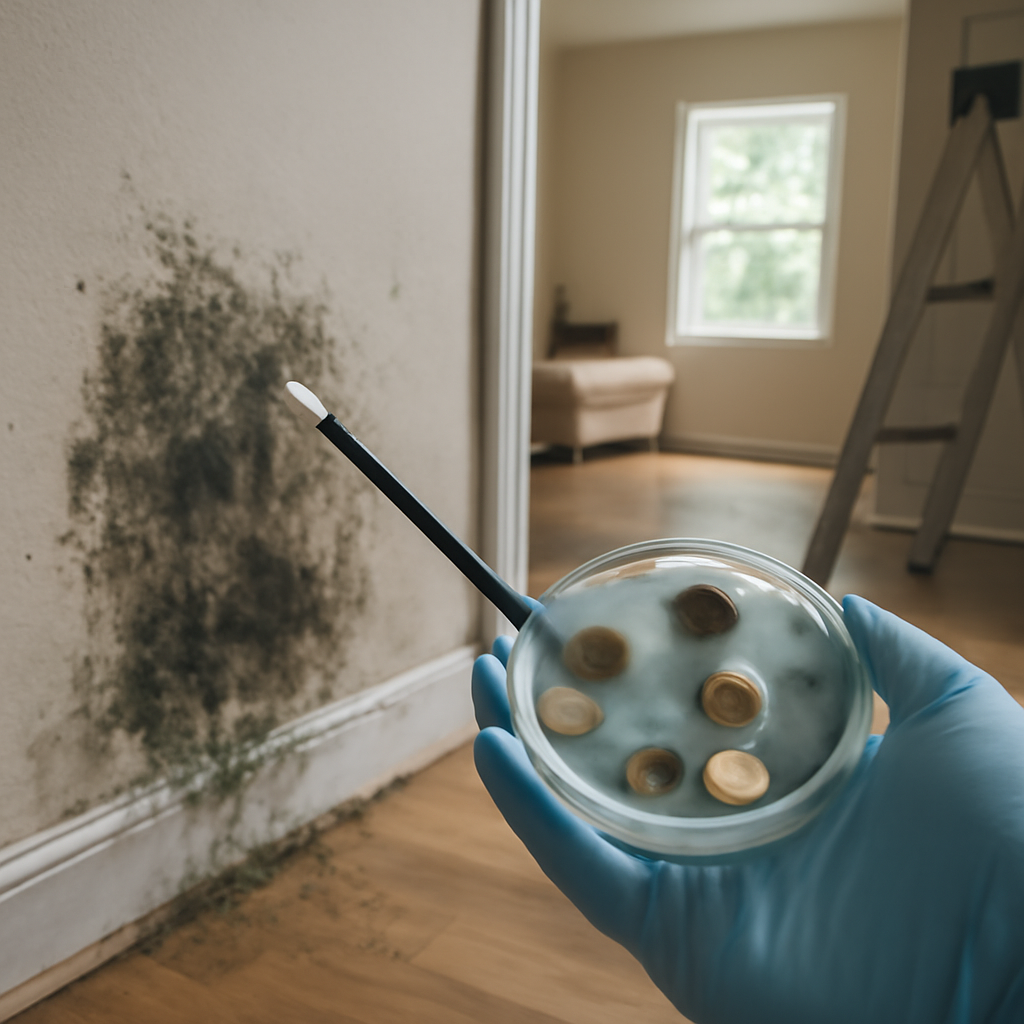
Mold testing uses laboratory analysis of air or surface samples to identify and quantify mold in a home, confirming what an inspection suspects and establishing a baseline that can be re-checked after cleanup. In Wheat Ridge, a mature Jefferson County suburb west of Denver where Clear Creek runs through the north end and 1950s-to-1970s brick ranches fill the neighborhoods, testing earns its place when moisture has a real foothold. This page explains when mold testing wheat ridge homeowners should consider sampling, how it differs from a visual inspection, and what it costs. This summary reflects EPA and CDC guidance current as of 2026; consult a certified professional for any decision involving mold.
Is this mold, asbestos, or water damage? Get a free instant screen
Upload a clear photo of the suspect area. You'll get an instant AI screening opinion and what to do next. This is screening guidance, not a professional determination.
Screening guidance only. AI can be wrong. Confirm asbestos, mold type, or lead with lab testing or a licensed professional before acting.
Mold testing in Wheat Ridge: what to know
Mold testing means collecting samples, typically air samples drawn through a spore trap, or surface samples lifted with tape or a swab, and sending them to a laboratory that identifies the mold types present and estimates their concentration. Testing answers questions an inspection alone cannot: what is growing, how much, and whether indoor spore levels differ meaningfully from outdoors.
In Wheat Ridge, testing is most useful when mold is suspected but hidden, when an occupant has unexplained respiratory symptoms, or when a buyer or seller needs documented confirmation. For the science behind sampling and how it fits the bigger picture, our plain-language mold hub for homeowners walks through it, our mold testing in Jefferson County guide covers the wider area, and our Wheat Ridge mold inspection guide covers the visual evaluation that usually comes first.
Why testing is a complement to inspection, not a substitute, is worth understanding. The EPA’s position is that sampling is not always necessary: if mold is visible and the water source is clear, the fix is the same regardless of species, so a homeowner can often move straight to cleanup. Testing earns its cost when the situation is ambiguous, growth suspected inside a Wheat Ridge basement wall after a Clear Creek high-water event, for example, where a measurement guides whether and where to open up the structure.
Why Wheat Ridge homes may need mold testing
Hidden moisture is the first driver. Wheat Ridge’s position along the Clear Creek corridor brings elevated groundwater and a history of basement and crawlspace water intrusion to lower-lying homes near the Clear Creek Trail and Prospect Park. When a homeowner smells a musty odor or sees a past stain but no active growth, air sampling can indicate whether elevated spore levels point to a hidden colony behind a finished basement wall, the kind of concealed problem this creek-corridor town is prone to.
Housing era shapes the need. The 1950s-to-1970s brick ranches that dominate Applewood, Fruitdale, Wheat Ridge Town Center, and Paramount Heights often have finished or semi-finished basements with original below-grade construction. Decades of settling and aging waterproofing create the conditions for slow, concealed moisture, and when drywall, paneling, or carpet hides the affected area, surface sampling of the suspect material or air sampling of the space gives data a purely visual inspection cannot.
Occupant health is the third driver. The CDC associates indoor mold with respiratory irritation and worsened asthma and allergies, and a household with a sensitive member, an asthmatic child, an immune-compromised adult, sometimes wants documented evidence of indoor conditions to guide decisions. In a Wheat Ridge home with both a creek-corridor moisture history and occupants reporting symptoms, testing provides a measured baseline that helps distinguish a genuine indoor source from outdoor seasonal mold drifting in.
Transactions and disputes are the fourth. When a Wheat Ridge home changes hands, a mold concern raised during the inspection period can stall a deal until someone produces data, and testing supplies that data in a form both sides can rely on. The same is true for a landlord-tenant disagreement or an insurance claim tied to a water event, where a documented sample result and an interpretation carry more weight than a subjective impression of a musty smell. In these situations testing is less about the homeowner’s curiosity and more about creating an objective record that can settle a question between parties who may not otherwise agree.
What Wheat Ridge mold testing covers
A typical testing visit starts with a brief assessment to decide what and where to sample, then collects the samples under controlled conditions so the lab results are meaningful. The two main approaches are air sampling and surface sampling, often used together.
Air sampling and the outdoor baseline
Air samples are drawn through a spore-trap cassette indoors and compared against an outdoor control sample taken the same day. The comparison matters because some outdoor spores always drift inside; what indicates an indoor problem is an indoor concentration or species profile meaningfully different from outside. In a Wheat Ridge basement, an elevated indoor reading against a clean outdoor baseline points to a concealed source worth investigating.
Surface sampling and post-remediation verification
Surface samples, collected by tape lift or swab from a suspect spot, confirm whether a discoloration is actually mold and identify the type. Testing also plays a role after cleanup: a post-remediation verification, combining a visual check that the area is dry and clean with confirmatory sampling, documents that the work succeeded. For a Wheat Ridge home sale or insurance claim, that documented clearance can matter as much as the original finding.
Mold testing cost in Wheat Ridge
Mold testing in the Wheat Ridge market is usually priced per sample plus a base visit fee. Individual air or surface samples commonly run about $100 to $200 each including laboratory analysis, and a typical project, an indoor sample, an outdoor control, and one or two surface samples, often totals roughly $300 to $600. A standalone post-remediation verification is priced similarly, scaled to the number of samples.
For an ambiguous situation, hidden moisture, a musty odor, or symptomatic occupants, that cost buys clarity about whether and where a problem exists, which can prevent both unnecessary demolition and the opposite mistake of ignoring a real colony. Where mold is already visible on a clear source, the same money is usually better spent on fixing the moisture and removing the mold.
Weigh testing against guesswork. Opening up a finished Wheat Ridge basement wall on a hunch is expensive and disruptive; a targeted air sample that confirms or rules out elevated spores first can save that demolition or focus it precisely. Used at the right moment, testing is a diagnostic that pays for itself by directing the response, not a routine add-on for every home.
Be wary of testing that promises more than the science delivers. A single air sample is a snapshot of one moment, and spore counts fluctuate with the weather, the season, and whether a door was just opened, so a credible provider frames results as one data point interpreted in context rather than a definitive verdict. Marketing that sells expensive whole-house testing for every transaction, or that treats any detectable mold as an emergency, misreads the EPA’s guidance that the real question is always moisture and source. For a Wheat Ridge homeowner, the most cost-effective testing is targeted, tied to a specific suspicion, and paired with a plan to fix whatever water problem the sampling helps confirm.
Wheat Ridge regulations and disclosure
Colorado does not license mold testers or set a numeric indoor mold action level, so there is no state pass-fail threshold a lab result is measured against. Results are interpreted by comparison, indoor versus outdoor, suspect area versus control, and by a qualified professional’s judgment, which makes the tester’s competence and independence important to verify.
Colorado’s Seller’s Property Disclosure asks sellers to report known mold and moisture conditions and past water damage, relevant in a creek-corridor town where flood and seepage history is common. A buyer who sees reported water intrusion on a Wheat Ridge disclosure has good reason to commission testing during the inspection period. Because no state clearance standard exists, a credible tester follows recognized industry and EPA-aligned protocols for sample collection and interpretation, and ideally remains independent of any remediation contractor to avoid a conflict of interest.
Neighborhoods and areas served
Testing demand in Wheat Ridge follows moisture and concealment: the finished basements of brick ranches in Applewood, Fruitdale, Wheat Ridge Town Center, and Paramount Heights, and especially homes near Clear Creek and Prospect Park where the corridor’s groundwater and flood history raise the odds of hidden growth. Homes with a musty odor but no visible source are the classic candidates for air sampling.
Service typically extends to adjacent Jefferson County and west-metro communities, including Arvada, Lakewood, Edgewater, Golden, and bordering Denver neighborhoods, which share Wheat Ridge’s older housing and foothills-fed moisture. A homeowner deciding whether to sample a damp-smelling basement faces the same questions as one in neighboring Arvada or Lakewood, so testing serves as a targeted diagnostic across this older west-metro band rather than a blanket requirement.
How to choose a Wheat Ridge mold testing provider
Look for a tester with IICRC or equivalent certification who explains why they recommend sampling and where, rather than testing reflexively. Ask whether they collect an outdoor control alongside indoor air samples, since that comparison is what makes air results interpretable, and confirm they use an accredited laboratory for analysis.
Independence matters most for testing. A provider who tests but does not also sell remediation has no incentive to inflate the findings, which is why many buyers prefer an independent tester for a transaction. Ask how they will interpret the results, a good provider explains what the indoor-versus-outdoor comparison means in plain language and ties it back to a likely source, rather than handing over raw lab numbers without context.
Confirm the provider delivers a clear written report with the lab data, the sampling locations and conditions, and a plain-language interpretation. For a Wheat Ridge homeowner, that report should say whether the data supports a hidden-mold concern, where to investigate, and, after any cleanup, whether a post-remediation verification confirms the area is clear. That transparent, comparison-based reporting is the mark of a mold tester worth hiring.
References
- When mold testing or sampling is appropriate — U.S. Environmental Protection Agency
- Mold and your health — Centers for Disease Control and Prevention
- Mold and indoor air quality in Colorado — Colorado Department of Public Health and Environment
When a Wheat Ridge basement smells musty but shows nothing visible, targeted mold testing tells you whether a hidden problem is real. To arrange independent sampling with a vetted local provider, get in touch through our contact page.