Mold Remediation Cleaner: How to Choose One
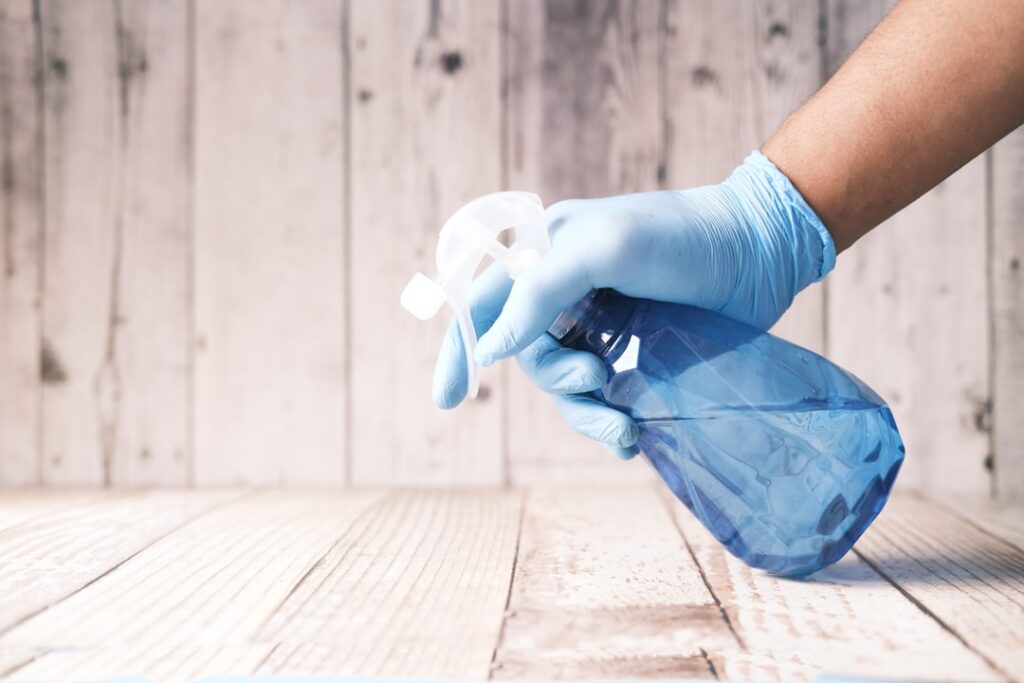
A mold remediation cleaner is any product marketed to remove visible mold growth from surfaces during a cleanup, and the category covers everything from household bleach dilutions to commercial antimicrobial concentrates. The label matters less than the moisture problem behind the growth, because mold returns wherever water keeps feeding it. This guide summarizes EPA and CDC guidance current as of 2026; it is educational and not a substitute for a certified professional assessment or medical advice. If you have symptoms you believe are related to mold, consult your physician, and for large or recurring growth consult a qualified remediation contractor.
Is this mold, asbestos, or water damage? Get a free instant screen
Upload a clear photo of the suspect area. You'll get an instant AI screening opinion and what to do next. This is screening guidance, not a professional determination.
Screening guidance only. AI can be wrong. Confirm asbestos, mold type, or lead with lab testing or a licensed professional before acting.
What a Mold Remediation Cleaner Actually Does
Most consumer cleaners in this category fall into a few chemistry families. Sodium hypochlorite (chlorine bleach) oxidizes pigments and kills surface organisms. Quaternary ammonium compounds, often called “quats,” are registered antimicrobials common in commercial janitorial lines. Hydrogen peroxide and peroxide-based formulas oxidize without the harsh chlorine odor. Botanical or thymol-based products market themselves as lower-toxicity alternatives.
The honest framing from federal agencies is narrower than most marketing copy. The EPA states that the purpose of remediation is to remove or clean contaminated materials in a way that prevents the spread of spores, not simply to apply a chemical that kills mold in place. Dead spores can still trigger allergic reactions. That distinction reshapes how you should read any cleaner’s claims: killing mold and removing it are two different jobs, and removal is the one that protects indoor air.
On hard, non-porous surfaces such as glazed tile, sealed countertops, and finished metal, a remediation cleaner can do most of the work because the growth sits on top. On porous materials such as drywall paper, bare wood, ceiling tile, and carpet, the hyphae penetrate below the surface and no topical cleaner reaches them reliably. Those materials usually need physical removal.
Reading the Label Before You Buy
Two pieces of information separate a serious product from a deodorizing spray. First, look for an EPA registration number, which signals the product is registered as an antimicrobial pesticide and has submitted efficacy data for its label claims. Second, read the directions for dwell time, the number of minutes the surface must stay wet for the active ingredient to work. A cleaner wiped off in ten seconds rarely delivers what the label promises.
Ventilation and protective-equipment notes on the label are not boilerplate. The CDC recommends gloves, eye protection, and an N-95 respirator for anyone disturbing mold, because cleaning agitates spores into the air. Chlorine and ammonia products must never be mixed, since the combination produces toxic gas. If a label warns against a surface type, believe it; bleach can corrode metal fasteners and discolor grout permanently.
Bleach Solutions Versus Commercial Antimicrobials
Diluted bleach remains the most widely referenced approach for small jobs on hard surfaces. It is inexpensive and fast on staining. Its limits are real: it is largely water, so on porous materials the water can feed remaining growth while the chlorine evaporates. Commercial quat-based remediation cleaners often leave an antimicrobial residue and resist evaporation better, which is part of why restoration crews favor them. Neither category substitutes for fixing the leak.
Where a Cleaner Fits in the Remediation Workflow
Professional remediation follows a sequence that a single product cannot replace. Contractors first contain the work area to keep spores from migrating, often with plastic sheeting and negative air pressure. They remove porous materials that cannot be salvaged. They HEPA-vacuum and damp-wipe remaining surfaces. Only then do antimicrobial cleaners play a role, and even then they are a step, not the strategy.
For a homeowner tackling a small patch, the EPA’s general guidance is that areas under about ten square feet can often be handled without a professional, provided the moisture source is fixed first. A remediation cleaner does its best work in that context: a small, hard-surfaced area, with the leak repaired, adequate ventilation, and protective gear on. Beyond that footprint, or where the material is soft and saturated, the cost-effective answer is removal and, frequently, a contractor.
Homeowners weighing a do-it-yourself cleanup against a service call often benefit from understanding the whole picture first. The broader mold inspection and testing hub walks through assessment, sampling, and when professional help is warranted. For product-specific comparisons, our overview of mold removal solution options breaks down chemistry families in more depth.
Surface-by-Surface Considerations
Bathrooms generate the most repeat questions because grout and caulk are porous and constantly wet. A remediation cleaner can lift staining from grout, but if mold keeps returning in the same caulk line, the durable fix is removing and replacing the caulk rather than re-cleaning it. Painted drywall behind a chronic leak is a removal candidate; once the paper backing colonizes, surface cleaning is cosmetic only.
Wood framing and subfloor present a middle case. Surface mold on framing lumber can sometimes be cleaned and the wood saved if it dried fast and the structure is sound, but staining that has penetrated the grain may call for sanding or encapsulation rather than a spray. HVAC components and ductwork are a special category the EPA flags for professional handling, because cleaners can be drawn into the air-handling system and distributed throughout the home.
The Limits of “Kills 99.9% of Mold” Claims
Efficacy percentages on labels describe controlled laboratory conditions, typically a specific organism on a specific surface at a specified dwell time. Real walls are dirtier, wetter, and more porous than test coupons. Treat those percentages as a ceiling under ideal conditions, not a guarantee for your bathroom ceiling. The more reliable predictor of success is whether you eliminated the water.
Preventing the Return of Growth
No cleaner prevents mold; moisture control does. The CDC and EPA consistently point to keeping indoor humidity below roughly 50 percent, fixing plumbing and roof leaks promptly, and ventilating bathrooms and kitchens as the core prevention measures. In Colorado’s Front Range, the dry climate helps, but finished basements, swamp-cooler humidity, and ice-dam leaks still create localized moisture that supports growth.
After any cleanup, dry the area thoroughly within 24 to 48 hours, the window the EPA cites for limiting mold establishment on wetted materials. A dehumidifier, fans, and open airflow accomplish more in that window than any antimicrobial residue. Re-inspect the spot over the following weeks; recurrence is the clearest sign the underlying moisture source was not resolved.
Comparing the Main Chemistry Families in Detail
Choosing among the chemistry families is easier once you understand the trade-offs each carries. Sodium hypochlorite, ordinary chlorine bleach, is the cheapest and acts fast on staining, which is why it remains the default reference for small jobs. Its weaknesses are real: it is corrosive to metal, it discolors many materials, its fumes are harsh in enclosed rooms, and because it is mostly water it does poorly on porous surfaces where the water can sustain remaining growth. It also degrades over time, so an old jug of bleach is weaker than the label suggests.
Hydrogen peroxide formulas oxidize like bleach but break down into water and oxygen, leaving less residue and far less odor. They are gentler on colored surfaces, which makes them attractive indoors, though they can cost more and may need a longer dwell time. Quaternary ammonium products are the workhorses of commercial janitorial and restoration lines because they leave an antimicrobial residue and resist quick evaporation, giving the active ingredient more time to act. Botanical formulas built on thymol or citric acid trade some speed for a lower-toxicity profile that suits households sensitive to chemical exposure.
No single family wins outright. The right pick depends on the surface, the size of the job, how enclosed the space is, and who will be in the home afterward. Reading these trade-offs against your specific situation produces a better outcome than reaching for whichever bottle promises the highest kill percentage.
Common Mistakes Homeowners Make
The most frequent error is treating the cleaner as the whole solution while ignoring the moisture source. A cleaned patch that sits on a still-leaking wall reappears within weeks, and each cycle of cleaning further disturbs spores. The second common mistake is insufficient dwell time. Most people spray and wipe within seconds, far short of the minutes the label specifies, which leaves the active ingredient no chance to work.
A third mistake is using bleach on porous materials and assuming the disappearance of the stain means the mold is gone. The pigment may bleach out while living growth remains below the surface. A fourth is skipping protective equipment, treating a quick wipe as harmless when it actually aerosolizes spores into the breathing zone. The final recurring error is mixing products, especially chlorine with anything containing ammonia, which produces a dangerous gas. Avoiding these five mistakes does more for a successful cleanup than upgrading to a pricier cleaner.
How Climate and Season Affect Mold in Front Range Homes
Colorado’s Front Range is dry for much of the year, which works in homeowners’ favor, but localized moisture still drives recurring growth. Finished basements trap humidity against cool foundation walls, where condensation forms even when the rest of the home is dry. Evaporative swamp coolers, common in the region, add substantial moisture to indoor air during summer, raising the humidity that feeds mold on cooler surfaces.
Winter brings its own patterns. Humidifiers run hard against dry indoor air, and if set too high they push relative humidity past the level where mold thrives. Ice dams on roofs can force meltwater under shingles and into attics and exterior walls, creating hidden wet pockets that surface as mold weeks later. Spring snowmelt and summer storms test grading and foundation drainage. A remediation cleaner addresses the symptom these conditions produce, but a homeowner who understands the seasonal moisture cycle can get ahead of the growth by managing humidity and watching the vulnerable spots before staining appears.
When to Stop Cleaning and Call a Professional
Several signals should redirect you from the cleaning aisle to a remediation specialist. Growth larger than about ten square feet, mold inside walls or HVAC systems, contamination from sewage or flood water, and any situation where occupants have asthma or compromised immunity all warrant professional evaluation. A specialist also brings containment and air-quality verification that a homeowner cannot replicate with a spray bottle.
A professional also resolves the question a cleaner never can: where the water is coming from. Remediation contractors and inspectors trace moisture to its source with meters and, where needed, deeper investigation, then verify the area is dry before rebuilding. That diagnostic step is what turns a temporary clean-up into a permanent fix, and it is the main reason large or recurring problems justify the cost of professional help rather than another trip to the store.
References
- Mold Cleanup in Your Home — U.S. Environmental Protection Agency
- About Mold and Your Health — Centers for Disease Control and Prevention
- Mold Remediation Guidance — U.S. Environmental Protection Agency
Front Range homeowners who want a vetted local inspector to assess the moisture source behind recurring growth can connect with a professional through our contact page.