Mold Killing Products: What Homeowners Need to Know
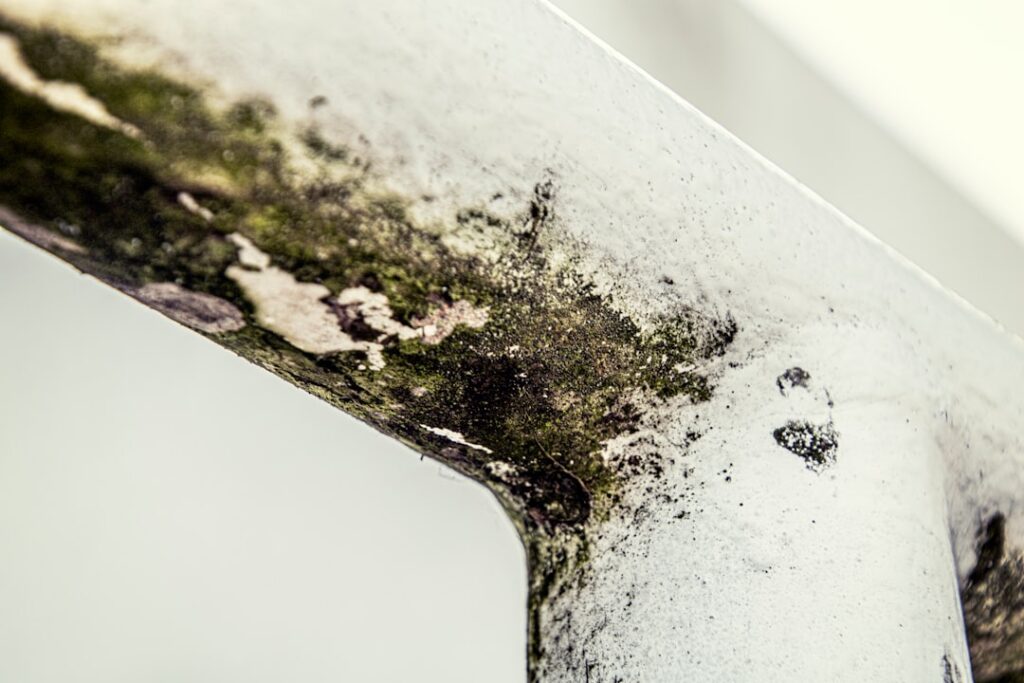
Mold killing products do exactly what the name says: they destroy living mold on the surface they touch. The marketing tends to stop there, leaving homeowners with the impression that a dead colony is a solved problem. It is not. Killing mold is one step in a three-part job, and the other two, physically removing the residue and fixing the moisture, are what actually keep mold gone. A product that kills the colony but leaves the wall damp has only paused the cycle. This guide explains how mold killing products work, where they help, and the two caveats that the labels rarely emphasize. It summarizes EPA and CDC guidance current as of 2026; consult your physician about symptoms and a certified professional for serious contamination.
Is this mold, asbestos, or water damage? Get a free instant screen
Upload a clear photo of the suspect area. You'll get an instant AI screening opinion and what to do next. This is screening guidance, not a professional determination.
Screening guidance only. AI can be wrong. Confirm asbestos, mold type, or lead with lab testing or a licensed professional before acting.
What Mold Killing Products Are
A mold killing product is a biocide formulated to destroy fungal growth. The common actives are chlorine bleach, hydrogen peroxide, quaternary ammonium compounds, and botanical agents such as thyme oil. Products that legally claim to kill mold are regulated as pesticides and carry an EPA registration number, which signals the agency reviewed the claims and the label directions you are required to follow. The killing action works on the surface; no biocide migrates into a porous material to reach embedded growth.
Killing Versus Cleaning Versus Removing
Three verbs get blurred in mold marketing, and untangling them clarifies what a killing product does. Killing destroys the living organism on contact. Cleaning lifts the visible staining and residue from the surface. Removing physically takes the material away, whether by wiping up residue or by discarding contaminated porous material. A product labeled as a killer focuses on the first verb, but a complete result requires all three, because a killed colony that is neither cleaned nor removed still sheds allergenic fragments and still sits on a surface that may stay damp.
This is why the strongest killing product, used alone, can still leave a homeowner dissatisfied. The mold is dead, yet the stain remains and the problem returns, because cleaning and moisture control never happened. Seeing the three verbs as a sequence, kill, clean and remove, then control the moisture, sets realistic expectations for what a killing product contributes. It does the first job well; the homeowner supplies the rest. Products that combine killing and cleaning shorten the work, but none of them substitutes for removing residue and fixing the water.
How They Work
Oxidizers
Bleach and hydrogen peroxide kill mold by oxidation, breaking down the cells they contact. Bleach is strong on staining and suited to hard, nonporous surfaces; peroxide is lower-odor and decomposes into water and oxygen.
Membrane Disruptors
Quaternary ammonium compounds damage the cell membranes of mold and leave a residual antimicrobial film. They are common in commercial disinfectants and lower in odor than bleach.
Botanical Actives
Plant-derived products such as thyme oil and citric acid kill surface mold with low toxicity, though they often need longer dwell times and more scrubbing on heavy staining.
Caveat One: Killing Is Not Removing
The first caveat is the one most homeowners miss. The EPA notes that dead mold can still cause allergic and irritant reactions. Killing the colony does not neutralize that effect; you still have to physically remove the residue. A killed colony left on a wall continues to shed allergenic fragments. So the correct sequence is kill, then remove, then dry. Our guide to what gets rid of mold and what does not explains why physical removal matters as much as the kill.
Caveat Two: Killing Without Moisture Control Fails
The second caveat is the bigger one. The EPA states directly that biocides are not a substitute for moisture control, and that the key to mold control is moisture control. A mold killing product destroys the current colony, but spores are everywhere and will recolonize any surface that stays damp. Kill the mold, leave the moisture, and you are back to the same stain in weeks. The EPA recommends keeping indoor humidity between 30 and 50 percent and repairing leaks within 24 to 48 hours. Killing products buy time; moisture control ends the problem.
Using Mold Killing Products Safely
These products disturb spores and produce fumes. The CDC and EPA recommend an N95 respirator, gloves, and sealed eye protection. Ventilate to the outdoors, do not run a fan toward clean rooms, and pre-clean grime so the biocide binds to mold rather than soil. Respect the label contact time, then remove the residue and dry thoroughly. Never mix products; bleach with ammonia or acids releases toxic gas. People with asthma, allergies, or weakened immunity should not do the work, and growth over about 10 square feet warrants professional remediation. For choosing among the options by surface, the guide to selecting the right mold cleaner compares products in detail.
EPA Registration and What the Claim Means
Any product that legally claims to kill mold is regulated as a pesticide and must carry an EPA registration number on its label. That number is more than fine print. It signals the agency has reviewed the product’s claims and its directions for use, and it makes following the label, the concentration, the contact time, the safety precautions, a legal requirement rather than a suggestion. A killing product without an EPA registration number that nonetheless claims to kill mold should be treated with skepticism, since its claims have not gone through that review.
For homeowners, the practical takeaway is to look for the registration number and then actually read the directions it stands behind. The label specifies how to dilute a concentrate, how long the product must stay wet, and which surfaces it is rated for. These are the parameters the registration was granted on, and deviating from them undercuts both the product’s effectiveness and its safety profile. Treating a killing product as the regulated pesticide it is, and the label as binding, is the difference between using it correctly and guessing.
When Killing Products Are the Wrong Tool
For porous, saturated material, no killing product is the answer. The EPA advises removing and replacing contaminated porous materials like drywall, ceiling tile, and carpet rather than dosing them, because the biocide cannot reach the embedded growth. For large or hidden contamination, or any tied to sewage or flooding, a professional with containment and HEPA filtration is the safe path. On the Front Range, winter condensation and evaporative-cooler humidity drive much indoor mold despite the dry climate; the mold inspection and testing hub explains how a professional finds the moisture source when killing products keep losing.
The Kill-Remove-Dry Sequence in Detail
Because killing is only the first of three steps, it helps to see how the full sequence plays out on a real surface. The kill stage applies the biocide and lets it dwell for the label contact time, long enough to destroy the living colony rather than just stun it. Wiping too soon, the single most common error, leaves viable growth behind. The removal stage then physically takes the dead material away, since the EPA notes dead mold still triggers allergic and irritant reactions; scrubbing, wiping, and bagging the residue is what clears the allergen from the room.
The dry stage closes the loop. Fans and a dehumidifier bring the surface and surrounding air well below the dampness that supports growth, ideally within 24 to 48 hours. A surface that is killed and cleaned but left damp simply waits for new spores, which are always present in indoor air, to settle and recolonize. Working all three stages in order is the difference between a killing product that solves a problem and one that merely postpones it. The product label sells the kill; the homeowner supplies the remove and the dry.
Matching Killing Products to the Surface
Not every killing product fits every surface, and the mismatch is a frequent source of disappointment. Bleach-based killers excel on hard, nonporous bathroom surfaces where staining is heavy, but they underperform on porous material because the water carrier soaks in while the chlorine stays on top. Hydrogen peroxide and botanical killers suit occupied rooms and lower-odor needs, working well on sealed surfaces with adequate dwell time. Quats leave a residual film useful where some ongoing suppression is wanted.
For porous, saturated material, the honest answer is that no killing product is appropriate. Bare drywall, ceiling tile, and carpet that have absorbed mold cannot be reached by a surface biocide, and the EPA recommends removal and replacement instead. Choosing a killing product, then, starts with confirming the surface can actually be saved. On a cleanable surface, match the active ingredient to the staining and the room; on a saturated porous one, set the bottle down and plan a removal. This single judgment prevents most wasted killing-product purchases.
Why “Kills 99.9 Percent” Does Not Mean Solved
Killing-product marketing leans on impressive percentages, and the numbers are often real under lab conditions. The gap between that claim and a solved problem is the gap between a controlled test surface and a damp wall in a real home. A product can kill nearly all the mold it contacts and still leave you with a recurring stain, because the surviving fraction, plus the constant rain of fresh spores from indoor air, recolonizes any surface that stays moist. The percentage describes the kill, not the durability.
This is the heart of the killing-product caveat. The EPA states plainly that biocides are not a substitute for moisture control and that the key to mold control is moisture control. A 99.9 percent kill on a wall that stays wet buys days or weeks, not a resolution. Reading these claims with that context, as a statement about contact-kill efficacy rather than a promise of permanence, keeps expectations honest. The durable result comes from pairing the kill with thorough removal and, above all, with eliminating the water that grew the mold in the first place.
Safety Beyond the Mask
Personal protection for killing products goes further than slipping on a respirator. The N95, forearm-length gloves, and sealed goggles are the baseline, but ventilation and chemical handling matter just as much. Open a window to the outdoors for fresh air, and avoid running a fan that pushes contaminated air toward clean rooms, which spreads spores rather than clearing them. Read the label’s storage and disposal directions, since many biocides degrade over time and lose potency in old containers.
The gravest hazard is mixing. Bleach combined with ammonia produces chloramine gas; bleach combined with acidic cleaners produces chlorine gas. Both can cause serious respiratory injury, and both happen most often when a homeowner reaches for a second product in frustration that the first did not work. The disciplined approach is one product at a time, used per its label, with full contact time. People with asthma, allergies, or weakened immune systems should not handle these chemicals at all, and any growth beyond about 10 square feet belongs to a professional with proper containment.
References
- Mold Cleanup in Your Home — U.S. Environmental Protection Agency
- You Can Control Mold — Centers for Disease Control and Prevention
- A Brief Guide to Mold, Moisture and Your Home — U.S. Environmental Protection Agency
Front Range homeowners whose mold killing products keep failing can connect with a vetted local inspector through our contact page to address the moisture behind the recurrence.