Mold Detector Near Me: 2026 Service Guide
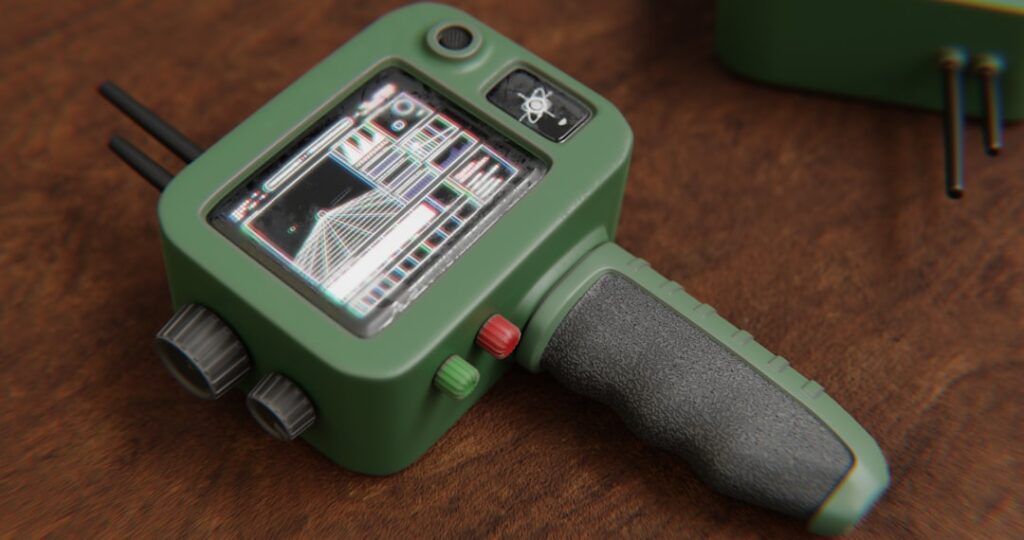
“Mold detector near me” reads two ways: shoppers looking for handheld mold-detection devices and homeowners searching for a credentialed mold inspector — a human professional — within driving distance. Search-intent analysis suggests the second meaning dominates in 2026, particularly along the Front Range where local-service queries trend toward person-not-product. This guide summarizes EPA and CDC guidance current as of 2026 — consult a certified mold inspector for testing decisions and your physician for symptom evaluation. This guide focuses on finding the right professional, vetting credentials, comparing quotes, and understanding what a Front Range mold inspection actually delivers.
Is this mold, asbestos, or water damage? Get a free instant screen
Upload a clear photo of the suspect area. You'll get an instant AI screening opinion and what to do next. This is screening guidance, not a professional determination.
Screening guidance only. AI can be wrong. Confirm asbestos, mold type, or lead with lab testing or a licensed professional before acting.
What “mold detector near me” actually returns in search
The top results blend three categories: third-party inspector directories like ASHI Find an Inspector and the InterNACHI Member Search, individual local inspection companies, and Google’s local-pack listings showing nearby businesses on a map. The local-pack listings are the practical starting point for most homeowners because they show distance, hours, review counts, and call-now buttons. Directory results layer in credential filtering — only members of those associations appear in the lists.
A handful of results show handheld moisture-meter and air-quality-monitor products. These are tools, not services. A consumer moisture meter — Protimeter, Tramex, General Tools brands — ranges from $30 to $300 and tells the homeowner whether a wall reads damp. It does not identify mold species or produce a defensible report. The human inspector is the meaningful “detector” for most search intents.
The credentials that matter when hiring a Front Range mold inspector
Colorado does not license mold inspectors specifically, which makes voluntary credentials more important than in states with mandatory licensing. Five credential families dominate the legitimate market.
The American Society of Home Inspectors Certified Inspector (ASHI CI) marks an inspector who has passed the National Home Inspector Examination, completed at least 250 paid inspections, and committed to the ASHI Standards of Practice. Many ASHI members also carry mold-specific add-on certification.
The International Association of Certified Home Inspectors Certified Professional Inspector (InterNACHI CPI) requires passing the InterNACHI Inspector Examination, completing online training modules, and signing an ethics commitment. InterNACHI offers a dedicated mold-inspector add-on credential beyond the base CPI.
The Indoor Air Quality Association (IAQA) is a professional society for indoor environmental specialists. IAQA membership signals ongoing continuing education and access to industry-standard sampling protocols.
The Council-certified Microbial Investigator (CMI) and Council-certified Indoor Environmentalist (CIE) credentials from the American Council for Accredited Certification are higher-tier specialist marks. CMI holders typically run forensic-grade investigations for litigation and large commercial cases.
The IICRC S520 Standard for Professional Mold Remediation is the technical reference document remediation companies follow. Many credentialed inspectors are also S520 familiar even when they don’t perform remediation themselves.
How to find and shortlist credentialed inspectors near you
Start with the ASHI Find an Inspector tool and the InterNACHI member directory. Both let you filter by ZIP code and service type. Cross-reference each name with the IAQA member directory. Five to ten candidates within a 30-minute drive is typical for the Denver-Boulder-Colorado Springs corridor.
Read recent reviews on Google and the Better Business Bureau. Look for reviews that describe what the inspector actually did — moisture mapping, infrared scanning, number of samples, written report quality — not just star ratings. A four-star review with detailed methodology beats a five-star review that says “great guy.”
Confirm three things before requesting a quote. First, the credential is current — both ASHI and InterNACHI publish active-status indicators in their directories. Second, the inspector carries errors-and-omissions insurance — ask for the policy carrier and verify by phone if the engagement is high-stakes. Third, the inspector uses an accredited lab — EMSL Analytical, EMLab P&K, and Aerotech are the dominant national labs and all hold AIHA-LAP accreditation.
What a Front Range mold inspection actually includes
A standard residential inspection runs two to four hours for a 2,000-square-foot home. The inspector starts with an interview about odors, symptoms, recent water-damage events, and known problem areas. They walk the property exterior to identify drainage and roof conditions that drive moisture intrusion.
Indoor inspection follows. The inspector uses a calibrated moisture meter — typically a Protimeter Survey Master or Tramex Moisture Encounter Plus — on bathroom walls, basement perimeter, around plumbing fixtures, and behind toilets. Infrared scanning with a thermal imaging camera identifies temperature differentials that indicate hidden moisture in walls and ceilings. Visible inspection of HVAC return registers, basement utility areas, attic hatches, and crawlspace entries identifies sites for sampling.
Air sampling deploys cassettes in rooms of concern, a comparison “control” room, and a matched outdoor reference. Surface swabs target visible growth. Bulk samples cut into wall cavities only with permission and only when other methods suggest hidden contamination. Each sample is logged, photographed, and shipped under chain-of-custody to the accredited lab.
What the written report should contain
A professional report runs 15 to 40 pages depending on the scope of the inspection. The narrative section summarizes visible findings, moisture-meter readings with location data, infrared scan results, and the inspector’s working hypothesis about moisture sources. The lab section lists each sample’s spore counts and species identifications in tables, with comparisons to the matched outdoor reference. The photographic section documents each sample location and any visible growth.
The recommendations section is where reports vary most in quality. A good report names specific remediation priorities — for example, “remove and replace gypsum board to 24 inches above the floor in the laundry room before cosmetic finish work” — rather than vague guidance like “address moisture issues.” A good report also recommends post-remediation verification sampling using the same methodology that found the original problem. For pillar-level coverage of testing methodology, see the mold inspection and testing hub.
Front Range pricing in 2026
Pricing along the Front Range varies by metro area, home size, and scope. Metro Denver pricing typically runs $400 to $550 for a 2,000-square-foot home with basement and three to four air samples. Boulder and Jefferson counties run slightly higher — $450 to $600 — because of denser tree cover, more aggressive groundwater conditions, and more older housing stock with known moisture history. Adams and Elbert counties run slightly lower — $350 to $500 — because newer housing stock predominates.
Colorado Springs and the southern Front Range run $350 to $550 for a comparable scope. Mountain communities — Evergreen, Conifer, Bailey, Estes Park — add $50 to $150 in travel and remote-site surcharges. Homes with crawlspace foundations add $100 to $200 for crawl access. Homes with finished basements over 1,500 square feet add $50 to $150 for the additional inspection time.
HVAC duct sampling adds $150 to $300 depending on the system complexity. Lead-based-paint sampling on visible chipping paint in pre-1978 homes adds $75 to $200 if both inspections happen on one visit. Rush turnaround on the lab portion adds $50 to $150 per sample.
Comparing quotes: scope matters more than price
When comparing three quotes from credentialed inspectors, normalize the scope before comparing the price. Confirm whether lab fees are included or billed separately. A $350 quote that excludes $200 in lab work costs more than a $500 all-inclusive quote. Confirm the number and type of samples — three air cassettes is the minimum credible scope for a single-family home with basement.
Confirm whether infrared scanning is included or charged as an add-on. Some inspectors quote a base price that excludes infrared and then upsell the scan during the visit. Confirm whether the report is verbal, summary-PDF, or full-narrative-with-photos format. Only the third option is suitable for real-estate disputes, insurance claims, or litigation.
Confirm the turnaround. Standard delivery is five to ten business days. Some inspectors offer three- to five-day delivery for an added fee. Some quote a delivery time that excludes weekends and holidays, so a “five business day” promise in mid-December may stretch to three weeks calendar time.
When same-day or next-day mold detection is realistic
Visual inspection and moisture-meter readings happen same-day. Infrared scans happen same-day. Lab analysis of air and swab samples does not — the cassette must ship to the lab, the lab must culture and microscopically analyze, and a microbiologist must review and write up findings. Three to five business days is the realistic floor for lab results, and even rush turnaround rarely beats two business days.
For emergency triage — a known water-damage event with active occupant symptoms — some inspectors will do a same-visit verbal preliminary assessment based on moisture readings and visible growth, with lab confirmation following. That preliminary assessment is not a defensible report and won’t satisfy insurance or real-estate requirements, but it gives the homeowner an immediate action plan while the lab does its work. For a deeper view of in-home professional inspection scope, see our in-home mold inspection cost and process guide.
Red flags when vetting a Front Range mold inspector
An inspector who also performs remediation on the same project has a structural conflict of interest. The InterNACHI standards of practice discourage this combination. Some companies do offer both services through separate divisions with a written firewall — that’s acceptable when documented, but verbal assurance isn’t enough.
An inspector who skips outdoor reference sampling produces uninterpretable indoor data. An inspector who refuses to use lab analysis and relies on visual identification alone cannot distinguish species. An inspector who quotes far below market — under $200 for a full assessment — is cutting corners somewhere, usually on sample count, lab choice, or report quality.
An inspector without errors-and-omissions insurance leaves you uncovered if their findings miss contamination later discovered during remediation or a sale. An inspector who can’t explain their sampling rationale — “why this room, not that one” — hasn’t actually thought through the inspection plan.
What to do with the inspection report once it arrives
A clean report — no elevated counts, no visible growth, no moisture anomalies — closes the matter for the homeowner and provides documentation for future buyers if the home is sold within a year or two. A report identifying localized elevated counts triggers source-moisture investigation and remediation planning. A report identifying systemic contamination — multiple rooms with elevated counts and widespread moisture readings — usually calls for an IICRC S520-certified remediation contractor and post-remediation verification sampling.
Insurance claims require the report be submitted with the claim paperwork. Real-estate transactions require the report be shared with the seller and the seller’s agent through the inspection-objection process. Litigation requires the report be authenticated by the inspector, who may be called to testify about methodology and findings.
The handheld mold-detector device category
Some “mold detector near me” searches do return product results — handheld moisture meters and consumer air-quality monitors that homeowners use between professional visits. These devices don’t replace a credentialed inspector, but they provide ongoing ambient data that supports informed decisions about when to escalate to professional sampling.
Moisture meters dominate the residential tool category. Protimeter, Tramex, and General Tools are the brand leaders. The Protimeter Survey Master and Tramex Moisture Encounter Plus are professional-grade units in the $200 to $400 range. The General Tools MMD4E is a consumer-grade pin-type meter in the $30 to $60 range. All three brands produce reliable readings when used per manufacturer instructions on appropriate substrates.
Consumer air-quality monitors — Airthings, uHoo, IQAir AirVisual — measure ambient particulates, humidity, and certain volatile organic compounds. They don’t directly detect mold spores or species, but elevated readings on the humidity and VOC channels often correlate with the conditions that support mold growth. Units run $200 to $400. The data informs investigation rather than confirming contamination.
How long-distance versus local detection compares
The “near me” framing implies geographic proximity matters. For mold inspection specifically, local proximity has practical value beyond convenience. Local inspectors understand regional moisture patterns — when Front Range basements stress, when evaporative coolers drive growth, which neighborhoods sit in high-water-table zones. A Florida-based inspector knows Florida; a Front Range inspector knows the Front Range.
Local inspectors also build ongoing relationships with regional remediation contractors, lab partners with regional offices, and insurance adjusters who recognize their reports. The administrative speed of local inspection benefits homeowners whose inspection-objection deadlines run tight. Mountain-community homeowners may need to choose between accepting a travel surcharge for an experienced metro-area inspector or hiring a smaller-market local inspector with thinner credential depth.
What to do if a credentialed inspector is unavailable in your area
Smaller markets along the Front Range — Steamboat Springs, Glenwood Springs, Pueblo, Greeley — sometimes have only one or two credentialed mold inspectors locally. When availability is constrained, options include accepting a longer scheduling lead time of two to four weeks, paying a travel surcharge for a metro-area inspector to drive out, hiring a local home inspector who offers mold sampling as an add-on service, or commissioning a comprehensive professional remediator who also performs sampling.
The third option carries a credential-quality risk because not every general home inspector has the mold-specific training that an ASHI mold-add-on or InterNACHI CMI inspector brings. Verify credentials before committing. The fourth option carries the structural conflict-of-interest concern because remediators have financial incentives to find more contamination than exists.
Booking timeline and scheduling expectations
Front Range mold inspectors typically book two to four weeks out for non-urgent appointments. Urgent appointments — water-damage events with active occupant symptoms, real-estate transactions with tight inspection-objection deadlines — usually get accommodated within five to ten business days for an added rush fee of $50 to $150. Some inspectors keep a small buffer of next-day slots specifically for transaction-driven urgency.
The scheduling call typically takes 15 to 30 minutes. The inspector asks about the home’s age, size, layout, known moisture history, occupant symptoms, and visible evidence. They use that information to scope the inspection — number of samples, areas to focus on, time required, and price. Some inspectors send a written scope and contract for signature before the visit; others confirm scope verbally and finalize during the on-site walkthrough.
Day-of-inspection scheduling typically spans a two-to-four-hour window. The inspector usually wants the homeowner present for the first 15 to 30 minutes for the interview and walkthrough, then can work independently during sampling and instrument measurement. Some homeowners stay for the full visit; others leave after the interview and return for a verbal preliminary at the end.
Comparing service models: solo inspector versus inspection company
Front Range mold inspection services come from two business models. Solo credentialed inspectors operate as one-person businesses, with the same person handling phone intake, scheduling, on-site work, lab coordination, and report writing. Inspection companies employ multiple inspectors with administrative staff handling intake and scheduling.
Solo inspector advantages include consistency (the same person you spoke with shows up at the door), accountability (clear line of responsibility for the entire process), and often lower pricing due to reduced overhead. Disadvantages include longer scheduling lead times, vacation and illness coverage gaps, and limited capacity for complex multi-day investigations.
Inspection company advantages include broader scheduling availability, backup coverage when individual inspectors are unavailable, and capacity for larger projects requiring multiple days or specialized equipment. Disadvantages include variable consistency across inspectors within the company and sometimes higher pricing due to administrative overhead. Both models can deliver high-quality work — the credential quality of the individual inspector matters more than the business structure around them.
References
- EPA — Mold Cleanup in Your Home — U.S. Environmental Protection Agency
- CDC — Basic Facts About Mold — U.S. Centers for Disease Control and Prevention
- ASHI — Find a Certified Inspector — American Society of Home Inspectors
- InterNACHI — Mold Inspection Standards — International Association of Certified Home Inspectors
- CDPHE — Mold and Moisture Guidance — Colorado Department of Public Health and Environment
If you’re searching for a credentialed mold detector in the Denver metro, Boulder, Colorado Springs, or anywhere along the Front Range, get in touch through our contact page and we’ll connect you with a vetted local inspector who matches your project scope.