Lead Testing in Northglenn, Colorado | InspectandTest
Northglenn’s planned post-war boom in the 1950s and 1960s left the suburb with a large share of pre-1978 homes, the era when lead-based paint was still used. Lead testing northglenn families arrange finds lead paint and lead dust before they harm children, who are most at risk from even small exposures. This page explains how lead testing works, where lead hides in older Adams County homes, what the law requires, and what it costs. This summary reflects EPA, CDC, and HUD guidance current as of 2026; consult your physician about blood-lead concerns and a certified professional for testing decisions.
Asbestos or biohazard concern? Speak with a certified contractor.
📞 Call (877) 742-8496Lead testing in Northglenn: what to know
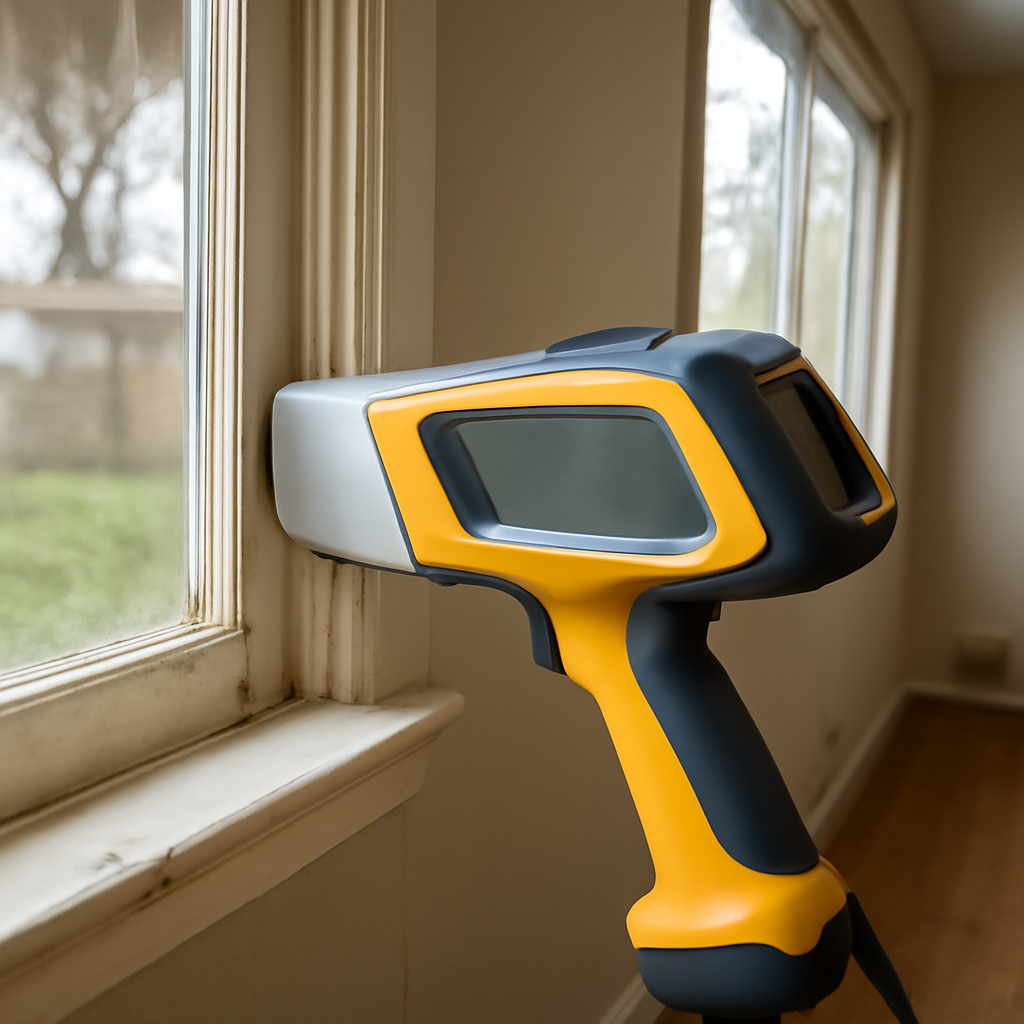
Lead testing identifies lead-based paint and lead-contaminated dust or soil in and around a home. The federal government banned lead-based paint for residential use in 1978, so the practical dividing line is the home’s age: a pre-1978 Northglenn home is far more likely to contain it. Testing methods range from an XRF analyzer that reads painted surfaces in place to dust-wipe and paint-chip samples sent to a lab.
Because Northglenn was built largely before 1978, a big part of its housing falls into the higher-risk category. For the broader background on why the 1978 cutoff matters and how lead affects health, our guide to asbestos and lead in pre-1978 housing covers the essentials.
The reason lead matters most for children is biological. The CDC states there is no safe blood-lead level in children, and young kids absorb lead more readily and are harmed at lower doses than adults. Lead dust from deteriorating paint or from sanding during a remodel is the most common exposure route, which is why testing before renovation is so important in older homes.
The exposure route is less dramatic than people expect, which is part of why it is easy to overlook. It is rarely a child eating a paint chip; far more often it is invisible dust from old window and door friction that settles on floors and sills, then ends up on hands and toys and into the mouth during normal play. A Northglenn family living comfortably in a tidy 1960s home can still have an exposure problem they cannot see, which is exactly the situation testing is designed to reveal before a blood-lead test in a child reveals it the hard way.
Why Northglenn homes need lead testing
The build era is the core reason. A large share of Northglenn’s stock dates to the 1950s and 1960s, squarely in the period when lead paint was standard, so homes in Original Northglenn, Stonehocker, and Hillcrest commonly have lead paint under newer layers. The HUD guidance treats pre-1978 housing as presumed lead risk until tested.
Where lead hides is predictable. Lead paint concentrates on surfaces that take wear: window sashes and sills, door frames, painted trim, porches, railings, and exterior siding. Friction at windows and doors grinds the paint into fine dust that settles on floors and sills, exactly where crawling children encounter it.
Renovation is the trigger. As Northglenn’s mid-century homes get updated, sanding, scraping, and demolition release lead dust throughout a house. The EPA’s Renovation, Repair and Painting Rule requires lead-safe work practices in pre-1978 homes for paid contractors, and a family doing its own remodel needs to know where the lead is first. Testing turns an invisible risk into a map a household can act on.
A common mistake is dry-sanding old painted trim or windows to repaint them, which is among the worst things to do in a pre-1978 home. Power sanding lead paint throws fine dust across an entire room and into the HVAC system, contaminating surfaces far beyond the work area. A Northglenn homeowner who knows in advance that the trim contains lead can use wet methods, containment, and proper cleanup instead, or hire a lead-safe certified contractor. The testing is what makes that informed choice possible before the dust is already spread.
What Northglenn lead testing covers
A lead inspection or risk assessment checks painted surfaces, settled dust, and sometimes soil, depending on the home and the reason for testing. The assessor documents each result by location so a family knows precisely which surfaces need care.
Inspection versus risk assessment
A lead inspection identifies which painted surfaces contain lead, usually with a portable XRF analyzer that reads the paint in place without damaging it. A risk assessment goes further, evaluating where lead is actively creating a hazard through deteriorating paint or dust, and recommending controls. A family with young children often wants the risk assessment because it targets the real exposure points.
Dust-wipe and soil sampling
Dust-wipe samples taken from floors, window sills, and troughs measure the lead a child could actually ingest, and they are the standard for clearance after lead-safe work. Soil samples near the foundation or under exterior windows catch lead that has flaked off old siding. Both go to an accredited lab for analysis against federal hazard standards.
Dust wipes matter because they measure exposure, not just presence. A surface can have lead paint under newer layers and still pose little immediate hazard if it is intact, while a windowsill with no visible problem can carry dangerous dust from friction. By sampling where a child actually contacts surfaces, dust wipes tell a Northglenn family whether the lead in the home is currently reaching the people in it, which is the question that matters most for a household with young children.
Lead testing cost in Northglenn
A professional lead inspection or risk assessment in the Northglenn market typically runs about $300 to $600 for a single-family home, depending on size and scope. Individual lab-analyzed dust wipes or paint chips cost less, while XRF-based whole-home inspections sit at the higher end because they require specialized equipment.
A DIY swab kit from a hardware store costs a few dollars and can flag obvious lead on an accessible surface, but it does not measure dust hazards or give a defensible result. For a family with young children or a planned renovation, the professional assessment is the reliable choice. An older Northglenn home with many original painted surfaces can sit at the higher end of the range simply because there is more to evaluate.
The swab kits have a real but narrow use. They can confirm lead on an accessible painted surface a homeowner is about to disturb, giving a quick yes before, say, sanding a single door. What they cannot do is rule lead out reliably, measure dust on floors and sills, or produce a result that holds up for clearance or a transaction. A Northglenn family using a swab to decide whether to take lead-safe precautions on one surface is using it sensibly; one relying on a clean swab to declare a whole home lead-free is trusting a tool beyond what it can do.
Set the cost against the stakes. Lead exposure in early childhood is linked to lasting cognitive and developmental harm, and the damage is not reversible. A few hundred dollars to map the lead in a 1960s Northglenn home, before a child is exposed or a remodel spreads dust, is modest next to a lifetime of consequences and the cost of remediating a contaminated house.
Colorado regulations and disclosure
Federal law requires sellers and landlords of pre-1978 housing to disclose known lead-based paint and to provide the EPA’s lead pamphlet, and buyers get a 10-day window to test. Colorado follows the federal framework, and the Seller’s Property Disclosure asks about known lead-based paint, so a documented test result is useful in a Northglenn transaction.
For renovations, the EPA’s RRP Rule requires that paid contractors working in pre-1978 homes be lead-safe certified and follow containment and cleanup practices. A homeowner hiring a contractor for a Northglenn remodel should confirm that certification, and a family doing its own work should test first so it knows where lead-safe practices are needed.
Verifying a contractor’s lead-safe certification is straightforward and worth doing. A certified renovator follows specific containment, dust-control, and cleanup steps and can show the firm’s EPA certification on request. Hiring an uncertified handyman to scrape and repaint old Northglenn windows can leave a home more contaminated than before the work, with the family unaware until a child’s blood-lead test flags it. Confirming certification up front, and asking for a dust-wipe clearance test after the work, protects against exactly that outcome.
Neighborhoods and areas served
Lead risk tracks the pre-1978 housing across Northglenn: the 1950s and 1960s homes of Original Northglenn, Stonehocker, and Hillcrest, plus the Fox Run area, are the prime candidates. Older window and trim paint is the usual culprit regardless of subdivision.
Rental properties carry their own obligations across Northglenn. Landlords of pre-1978 units have federal disclosure duties, and a property with deteriorating paint and child occupants can create liability as well as a health hazard. An owner of older Northglenn rental stock who tests and documents the condition of painted surfaces is better positioned both to protect tenants and to meet disclosure requirements than one who waits for a problem to surface.
Service typically extends to adjacent Thornton, Westminster, Federal Heights, and Broomfield, which share Northglenn’s Adams County build era. Owners comparing the wider picture can read our overview of lead testing across Adams County, or look at the related asbestos testing in Northglenn page, since the same pre-1978 homes often carry both hazards.
How to choose a Northglenn lead testing provider
Ask whether the provider is an EPA or state-certified lead inspector or risk assessor, uses an XRF analyzer or an accredited lab for dust and chip samples, and documents results by location. A credible assessor explains the difference between an inspection and a risk assessment and recommends the one your situation needs.
For a family with young children, ask the provider to prioritize the high-contact surfaces, windows, doors, and floors, and to include dust wipes that measure real exposure. If lead is found, a good assessor explains interim controls and lead-safe renovation rather than pushing the most expensive option. A provider who is certified, uses accredited analysis, and frames results around protecting children is the kind worth hiring in pre-1978 Northglenn.
Interim controls are worth understanding because full lead abatement is not always necessary. Where lead paint is intact, options like repainting with an encapsulant, repairing friction points, and thorough dust cleanup can reduce exposure substantially at a fraction of the cost of removing everything. A good assessor lays out this ladder of responses, from low-cost stabilization to full removal, so a Northglenn family can match the action to the actual hazard and their budget rather than facing an all-or-nothing choice.
Re-testing has a place too, especially after work or as a child grows. A dust-wipe clearance test after any lead-safe renovation confirms the cleanup brought dust below hazard levels, and periodic checks make sense in an older home with young children as paint ages and friction surfaces wear. For a Northglenn household, treating lead as something to monitor over time, not just test once, reflects how the hazard actually behaves in a lived-in pre-1978 home.
References
- Lead in paint, dust, and soil — U.S. Environmental Protection Agency
- Childhood lead poisoning prevention — Centers for Disease Control and Prevention
- Lead-based paint requirements — U.S. Department of Housing and Urban Development
In a pre-1978 Northglenn home with young children or a remodel planned, lead testing maps the risk before anyone is exposed. To connect with a vetted local inspector or risk assessor, get in touch through our contact page.