Free Home Inspection Checklist Printable: Where to Find Them
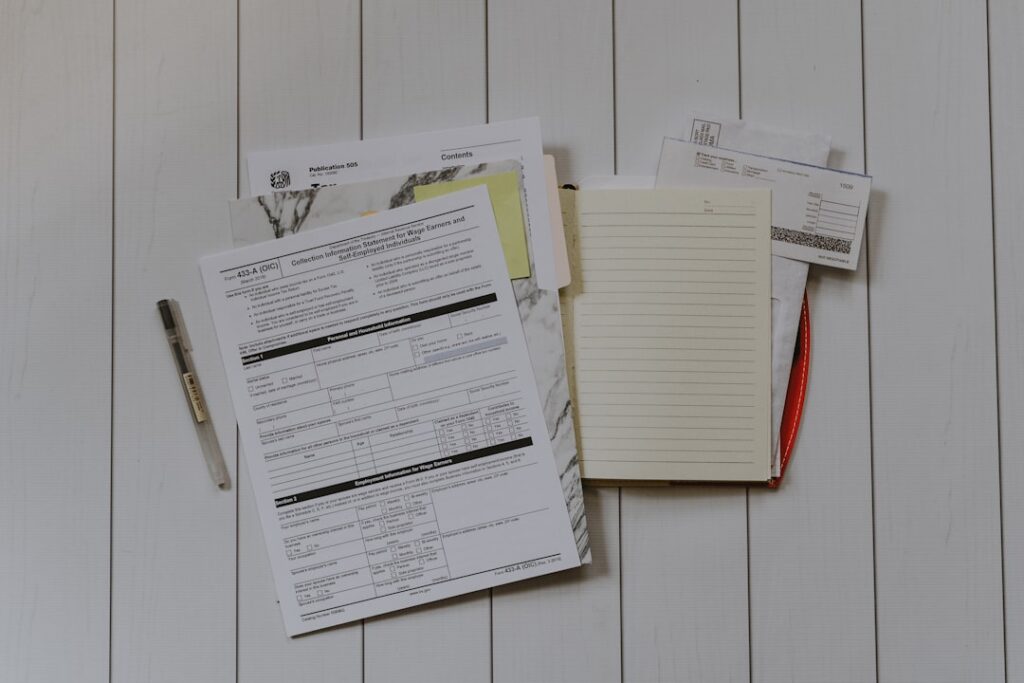
A free home inspection checklist printable is a downloadable PDF the buyer can print and use during their property walkthrough, either alongside a credentialed inspector or for a self-guided pre-offer review. The good news is that several authoritative sources publish these for free without registration walls or paywalls. The catch is that a generic printable checklist is a starting point, not a substitute for a professional inspection. This article maps the most useful free resources, explains how to use a generic checklist effectively, and covers what the printable format inherently cannot capture.
Where to Find Free Printable Checklists From Authoritative Sources
Several trade and government organizations publish free downloadable inspection checklists. The most useful sources:
- InterNACHI Consumer Resources — InterNACHI publishes free downloads including consumer-facing checklists and a “Now That You’ve Had a Home Inspection” guide. These are aligned with the NACHI Residential Standards of Practice.
- ASHI Consumer Materials — ASHI publishes consumer-facing brochures and articles, including “A Buyer’s Home Inspection Checklist” style content.
- HUD Homebuyer Materials — HUD’s “For Your Protection: Get a Home Inspection” booklet is the federal-government homebuyer education resource, free to download.
- State Housing Finance Agencies — many states publish homebuyer education materials that include inspection-prep checklists. Colorado Housing and Finance Authority, similar agencies in other states.
- Real Estate Brokerages — most major brokerages publish branded buyer-PDF templates; quality varies but they cover the basics.
For the buyer-side companion documents specifically designed for use during the visit, the buyer’s printable PDF article covers structure and use.
What InterNACHI Publishes Free
InterNACHI’s consumer resources include several free PDF downloads:
- The Residential Standards of Practice itself (the formal document inspectors use)
- A “Now That You’ve Had a Home Inspection” buyer-education guide
- “What Really Matters in a Home Inspection” articles
- Specific-system checklists (electrical, plumbing, HVAC) for consumer reference
These are accessible without registration on the InterNACHI consumer site. The Standards of Practice itself is the most authoritative single document the buyer can read for understanding what an inspection includes.
What HUD Publishes Free
HUD’s “For Your Protection: Get a Home Inspection” booklet (often distributed as a PDF) covers:
- Why a home inspection matters for buyers
- What an inspection covers under residential standards
- What is not covered
- How to find a qualified inspector
- What to do with the report
The HUD booklet is required reading material for FHA-financed homebuyers and is a useful overview for any buyer. It is short (8–12 pages typically), authoritative, and free.
What State Housing Agencies Publish Free
State-level homebuyer education programs typically include inspection-related materials. The format and content varies by state but commonly includes:
- State-specific inspector licensing information
- State-specific contingency timeline guidance
- Buyer-prep checklists for the inspection visit
- What to do with the inspection report
- State consumer-protection resources
Colorado’s Department of Regulatory Agencies and Real Estate Commission publish related materials, though Colorado does not license home inspectors at the state level.
How to Use a Free Generic Checklist Effectively
A generic free checklist is a starting point, not a comprehensive tool. Best practices for using one effectively:
- Print two copies — one for the inspector to walk through during the visit, one for the buyer’s own notes
- Add property-specific items — if the buyer noticed something during showings, add it as a hand-written row
- Use it as a question-prompt list, not a verification list — the inspector verifies condition; the buyer uses the list to know what to ask about
- Track unanswered items — anything left unchecked after the visit is a clarification question to email the inspector
- Pair with a professional inspection — a free checklist plus a credentialed inspector is the productive combination
For a sibling read with deeper buyer-PDF detail, the free printable inspection checklist article covers the format-focused angle.
What a Generic Checklist Cannot Do
Free checklists are limited by their generic nature:
- They cannot adapt to property-specific conditions (an unusual basement, an addition, a converted attic)
- They cannot apply judgment about severity
- They cannot identify hidden conditions requiring instruments (thermal camera, moisture meter)
- They cannot produce a documented record with photos for the buyer’s file
- They cannot serve as a basis for negotiation in a transaction
- They cannot replace the credentialed inspector’s professional liability and report deliverable
A generic checklist used alone is roughly as useful as a recipe used alone for someone who has never cooked. It frames the right tasks but does not produce the right result without the experienced hand.
Pre-Offer Walkthrough Use Case
One legitimate use of a free generic checklist is the pre-offer walkthrough. Before the buyer decides whether to make an offer at all, they can walk a property carrying a generic checklist and look at the major systems. This is not a formal inspection; it is a buyer self-screen. Findings at this stage might prompt the buyer to skip the property entirely or to adjust their offer pricing. For the formal-inspection counterpart used during the inspection contingency, the total checklist walks every system in depth.
DIY-Inspection Use Case
Some homeowners use generic checklists for their own annual home maintenance reviews. The annual self-inspection helps catch maintenance items before they become repairs. A generic checklist for this use should cover:
- Roof and gutter condition
- Exterior caulking and paint
- Foundation and drainage
- Attic insulation and ventilation
- Plumbing leaks visible under sinks
- HVAC filter replacement and equipment age
- Water heater pan and TPR valve
- GFCI testing in wet locations
- Smoke and CO alarm testing
This use of a free checklist is genuinely productive because the homeowner is doing maintenance review, not professional inspection.
Comparison: Free Resources vs. Paid Templates
Paid inspection-checklist templates exist on real-estate vendor sites and template marketplaces. They typically run $5 to $30 for a polished PDF or fillable form. The differences:
- Free generic checklists — adequate for basic walk-throughs, no fillable form fields in most cases, may be visually plain
- Free institutional checklists (HUD, NACHI, ASHI) — authoritative content, professional formatting, sometimes lengthy
- Paid templates — fillable form fields, branded layouts, often include extras like worksheets or comparison tables
For most buyers, the free institutional resources are sufficient. The paid templates buy convenience and aesthetic polish, not better content.
Confused by your home inspection report? Decode it free in plain English
Upload your inspector's PDF and get a plain-English summary, what actually matters, rough repair costs, and negotiation talking points. Educational only — not a professional re-inspection. Your file is analyzed and discarded, never stored.
Educational summary only. AI can be wrong and cost figures are rough estimates. This is not a professional re-inspection, appraisal, or legal/financial advice — confirm major items with your inspector or a licensed contractor.
The Print Format Itself
A useful printable checklist:
- Fits on 4–10 pages of letter-size paper
- Has wide enough margins for hand-written notes
- Uses font size 10–12 for readability
- Includes checkboxes for rapid marking
- Groups items by room or system
- Has space at the bottom of each section for notes
The visual format matters because the buyer is using it in real time during a walk through the property, often standing up, often referring to it briefly. Anything dense or cramped becomes useless.
When the Free Checklist Is Enough
A free checklist alone is sufficient when:
- The buyer is doing a pre-offer screening walk, not a formal inspection
- The homeowner is doing an annual maintenance review
- The buyer is preparing questions to ask a credentialed inspector before booking
- The seller is doing a pre-listing self-assessment
It is not sufficient when the buyer needs documentation for a real estate transaction. For that, the credentialed inspector and the written report are non-negotiable. For broader context on the engagement, the hiring-process pillar covers vetting and scheduling.
Government and Trade-Association Free Resources
Several free, credible inspection-checklist resources exist from government agencies and trade associations, and they are dramatically better than the typical SEO-bait checklist hosted on real estate brokerage sites. The U.S. Department of Housing and Urban Development publishes a free home-inspection brochure as part of its consumer-protection homebuyer materials. The HUD document focuses on what an inspection covers, why buyers should commission one, and what the buyer should expect from the deliverable. It is short, plain-language, and oriented to first-time buyers. The download is available through hud.gov in the buying-a-home consumer-resource section, and it is appropriate to print and share with family members evaluating a property purchase.
InterNACHI publishes its Residential Standards of Practice as a free PDF at nachi.org/sop.htm. The SOP is not a checklist in the traditional one-page sense; it is the underlying standard that credentialed inspectors operate against. Reading the SOP gives the buyer a complete picture of what is and is not within scope, and it serves as the most authoritative reference document a free download can provide. The SOP runs roughly 30 pages and reads more like a professional reference than a homeowner handbook, but the buyer who reads it once develops a baseline understanding that no SEO-page checklist replicates. InterNACHI also publishes consumer materials, including buyer guides, room-by-room checklists, and home-maintenance reference documents, all at no cost.
ASHI maintains parallel resources at homeinspector.org. The ASHI Standards of Practice document is freely downloadable, and ASHI’s consumer-education library covers topics from understanding the report to working with contractors after the inspection. State housing-agency consumer guides round out the free-resource landscape. Most state housing-finance agencies publish first-time-buyer guidance that includes inspection-contingency information, recommended checklists, and links to state regulatory bodies that license inspectors. These state-level documents often surface practical information about local market conditions, common findings in that state’s housing stock, and contingency-removal protocols specific to the state’s standard contract. Searching the state housing-finance agency’s website usually surfaces these materials within two clicks. The International Code Council at iccsafe.org publishes consumer-facing materials on building codes that overlap with inspection topics.
What a Free Checklist Lacks Compared to Professional Tools
A free printable checklist is a useful self-assessment tool, but understanding its limitations relative to professional inspection deliverables helps buyers calibrate expectations. The first gap is severity classification. Professional inspection reports tag each finding with a severity tier: safety, major functional, minor functional, monitor or maintenance. Free checklists typically present every item as a single tier, leaving the user without prioritization guidance. The homeowner who finds three items on a free checklist does not know which one requires immediate action and which can wait until next month. Professional severity classification turns observations into a triage list, which is the most actionable transformation an inspection report performs.
Photo-documentation framework is the second gap. Free checklists are text-only; a finding marked on a free checklist exists only in the user’s memory of what they saw. Professional reports pair each finding with photos that orient the reader to the location and close-up images that show the specific failure. Annotated screenshots with arrows or circles drawing attention to the deficiency are now standard. The user of a free checklist who wants comparable documentation must take their own photos and organize them manually, which works but requires discipline that most users do not maintain. Generic findings versus property-specific narrative is the third gap. Free checklists list general items that apply to most homes. Professional reports narrate the specific property: the make and model of the furnace, the age of the water heater, the manufacturer of the electrical panel, the type of plumbing supply, the actual condition of the roof rather than a generic check-the-box.
No follow-up recommendations is the fourth gap. Professional reports include specific recommendations: “consult a licensed electrician for panel replacement evaluation” or “engage a structural engineer for foundation movement assessment” or “schedule HVAC service to evaluate refrigerant levels.” Free checklists do not personalize follow-up the way a working inspector does. The fifth gap is liability and accountability. The professional inspector carries errors-and-omissions insurance, operates under a written contract, and is accountable for the deliverable in ways the free checklist cannot match. For a homeowner doing annual maintenance, the free checklist is appropriate. For a real estate transaction, the credentialed inspector and the written report are the right tools. The HUD, FTC, EPA, and trade-association resources at homeinspector.org and nachi.org all reinforce this distinction.
References
- InterNACHI free consumer resources and downloads — International Association of Certified Home Inspectors
- ASHI Standards of Practice and consumer materials — American Society of Home Inspectors
- HUD: For Your Protection — Get a Home Inspection booklet — U.S. Department of Housing and Urban Development
- FTC consumer guidance on home-buying due diligence — Federal Trade Commission