Flir Camera Rental: 2026 Daily Rate Guide for Homeowners
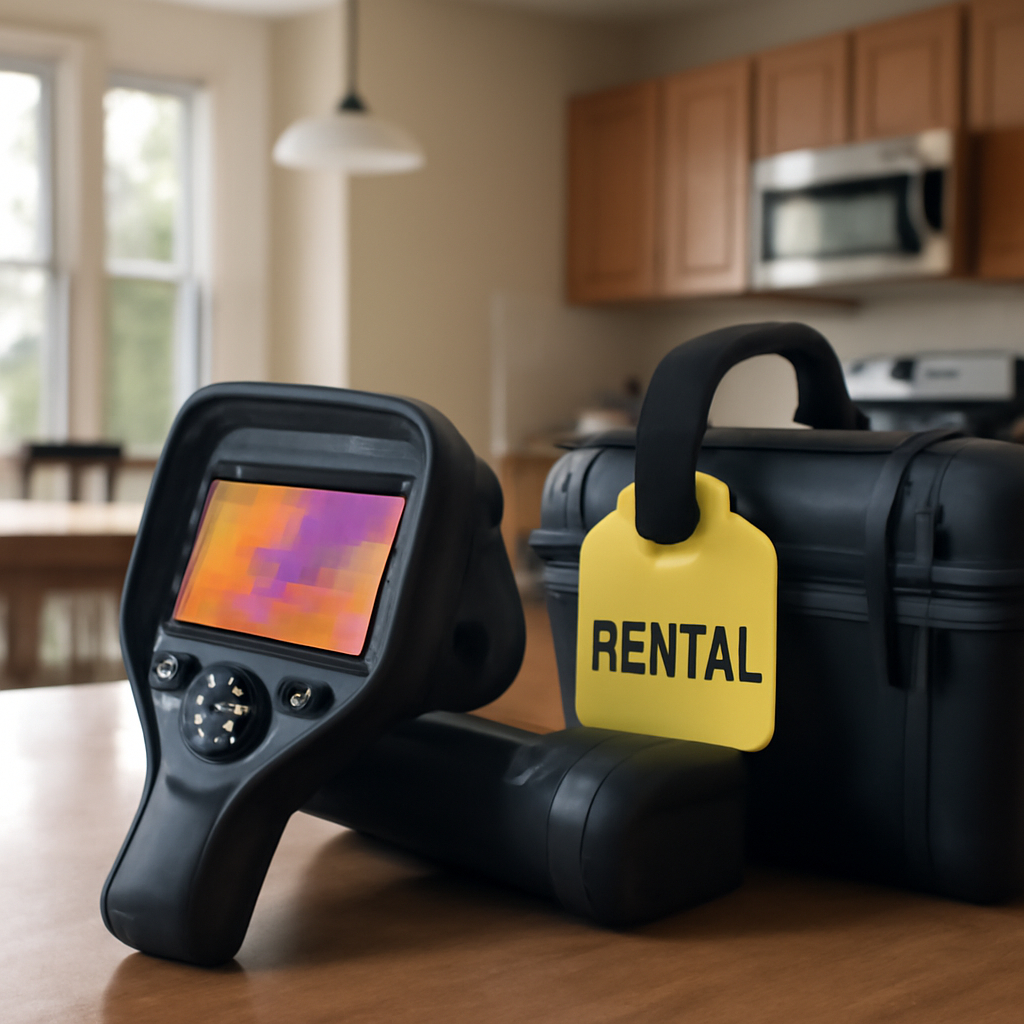
Renting a thermal imaging camera makes financial sense for homeowners who need the diagnostic capability for a specific project rather than ongoing use. A weekend energy audit, a one-time leak investigation, or a single rental property turnover does not justify buying a $1,000+ device. The rental market for FLIR-brand and equivalent thermal imagers has matured significantly in recent years, with consumer-tier rentals starting around $30 to $60 per day and professional units running $80 to $200 per day. This guide on FLIR camera rental covers what is available, what the daily rates actually buy, and how to decide between renting and purchasing for typical homeowner use cases. Note that “FLIR” is used here as a category descriptor since FLIR Systems is the largest brand in thermal imaging; rental houses typically carry FLIR alongside alternative brands at similar specifications.
Flir camera rental: what the market offers in 2026
Thermal imaging rental is available through several channels. Tool rental chains (Home Depot Rental, United Rentals, Sunbelt) carry consumer to mid-range handheld units. Specialty inspection-equipment rental houses (typically regional businesses serving home inspectors and energy auditors) carry the full professional range. Online rental platforms ship units to the renter with prepaid return shipping. Some manufacturer dealerships offer rentals as part of their sales channel. Each option has different pricing, deposit requirements, and equipment selection.
For homeowner-tier energy auditing and basic moisture screening, a smartphone-attached thermal accessory rental at $30 to $60 per day delivers adequate results. For real-estate-transaction-grade thermal inspection or leak diagnostics requiring better resolution, a mid-range handheld unit at $80 to $150 per day is more appropriate. For specialized applications — roof inspection requiring drone-mounted thermal, large-property surveys, or high-precision diagnostics — drone-mounted thermal systems rent at $300 to $800 per day, sometimes with operator services included.
Daily rate ranges by equipment tier
Consumer smartphone-attached thermal cameras (80×60 to 160×120 resolution, NETD around 70-100 mK) rent for $30 to $60 per day on the Colorado Front Range in 2026. The deposit is usually $100 to $250. The category includes accessories from several major manufacturers that connect via Lightning or USB-C. The smartphone integration is convenient for renters who already have the compatible phone, with no learning curve for the device interface.
Mid-range handheld thermal cameras (160×120 to 320×240 resolution, NETD around 40-60 mK) rent for $80 to $150 per day. The deposit is usually $300 to $600. These are dedicated devices with their own batteries, displays, and inspection-oriented software. They suit serious DIY diagnostic work and one-time professional-grade applications. Pro handheld thermal cameras (320×240 to 640×480 resolution, NETD below 40 mK) rent for $150 to $300 per day with $500 to $1,500 deposits. These are the units working home inspectors carry, and they justify their daily rate when the diagnostic output needs to support documentation or insurance claims.
Specialty rentals — drone-mounted and roof-survey systems
Drone-mounted thermal cameras for roof inspections and large-property surveys rent at $300 to $800 per day, often packaged with operator services. The package typically includes pre-flight planning, the actual flight, and post-flight image processing into a report. Insurance and FAA Part 107 compliance complicate self-rental of drone systems, so most homeowners end up using operator-included services rather than renting the equipment alone. For broader rental options across thermal imaging gear, the thermal camera rental guide covers the daily-rate ranges across the category.
Deposit, identification, and rental term norms
Rental thermal cameras require security deposits proportional to the equipment value. Smartphone-attached units typically need $100 to $250 deposits. Mid-range handheld units need $300 to $600. Pro handheld units need $500 to $1,500. The deposit is usually held on a credit card and released when the equipment is returned in working condition. Late returns and damaged equipment trigger fees that come out of the deposit; significant damage can exceed the deposit and result in additional charges.
Identification requirements vary. Tool rental chains typically require a driver’s license and credit card. Specialty inspection-equipment rental houses sometimes require additional verification — a business license for trade-customer pricing, proof of insurance for higher-value equipment, or references from prior rentals. Rental terms run from daily to weekly to monthly, with longer terms typically reducing the daily-equivalent rate. A weekend rental (Friday afternoon to Monday morning) sometimes counts as two days rather than three at participating shops.
What the daily rate actually includes
Base daily rate includes the camera, the battery (sometimes a spare), the charger, and a basic carrying case. Premium accessories — calibrated reference thermometers, telephoto lenses, additional batteries — are sometimes included with pro-tier rentals and sometimes available as add-ons. Software access varies. Some manufacturers’ rental units come pre-loaded with the analysis and reporting software; others require the renter to download separately. Cloud storage of captured images is sometimes included for the rental term and sometimes locked behind a separate subscription.
Damage and loss insurance is sometimes included in the daily rate and sometimes optional. Read the rental contract carefully — a small daily insurance add-on can be much cheaper than the full equipment replacement cost if the camera is dropped or stolen during the rental period. Some renters’ homeowner or business insurance policies cover rented equipment; checking with the insurance provider before the rental is worth a five-minute phone call.
When to rent versus when to buy
The break-even math is straightforward. A consumer smartphone-attached thermal camera that sells for $300 rents for around $40 per day, so the purchase pays for itself in about 7-8 rentals. A mid-range handheld that sells for $1,000 rents for around $120 per day, breaking even at about 8-9 rentals. A pro handheld that sells for $3,000 rents for around $200 per day, breaking even at 15 rentals. For homeowners using thermal imaging once or twice a year, renting is clearly cheaper. For inspectors or real-estate professionals using it weekly, buying is clearly cheaper.
Beyond the daily-rate math, rental has the advantage of avoiding equipment ownership concerns — calibration drift, battery degradation, firmware updates, obsolescence as sensor technology improves. The rental fleet rotates through the latest equipment, so a renter in 2026 gets access to better current-generation equipment than a 2022 purchase would deliver. The disadvantage is access friction — driving to pick up and return the unit, planning around the rental availability window, and being unable to investigate something the next time the question comes up at home. The home inspection tools hub covers the broader ownership-versus-rental considerations across the equipment category.
Pickup, return, and damage policies
Operational details affect the rental experience as much as pricing. Pickup procedures usually require the renter to present identification, complete a contract with deposit authorization, and receive a brief equipment orientation. Return procedures require the equipment to be returned in working condition with all included accessories during business hours. Late returns trigger additional day charges and sometimes penalty fees beyond the daily rate. Reading the rental agreement carefully before signing prevents unpleasant surprises.
Damage policies vary substantially between rental houses. Some include basic damage coverage in the daily rate, with the renter responsible only for negligent or intentional damage. Others require optional damage waivers ($10 to $30 per day) for any coverage. Without coverage, even minor damage like a scratched lens or dropped unit can result in significant out-of-pocket costs. Renters with homeowner or business insurance covering rented equipment can sometimes skip the rental house’s damage waiver, but verifying coverage in advance through the insurance provider is important.
Common homeowner rental use cases
Annual energy audit is the most common rental scenario. A homeowner rents a thermal camera for a weekend, walks through the house on the coldest morning available, documents the findings with phone photos and report annotations, and uses the information to plan insulation and air-sealing improvements over the following season. The total rental cost of $60 to $200 for a long weekend typically generates several thousand dollars of identified energy-efficiency improvements.
One-time leak investigation is the second common scenario. A homeowner with a suspected hidden leak — staining at a ceiling, recurring mold in a wall, mysterious utility bill increases — rents a thermal camera and a moisture meter for one or two days, surveys the suspect areas, and locates the leak source for plumber follow-up. Rental cost of $50 to $150 plus a $30 moisture meter rental can save hundreds of dollars in exploratory plumbing labor compared to opening walls without a target. Pre-purchase home inspection grade rental is the third scenario, typically when a buyer wants a thermal scan beyond what the included inspection offers.
Selecting the right rental tier for the job
Match the rental tier to the diagnostic question. For finding obvious insulation gaps and major air leaks on a typical winter Front Range home, an entry-level smartphone-attached unit at $40 per day is adequate. For finding subtle moisture patterns behind walls, mid-range handheld at $100-150 per day with NETD below 60 mK is more useful. For documenting findings to support a real-estate negotiation or insurance claim, pro handheld at $200 per day produces images and reports with the resolution and accuracy the documentation requires.
Underspeccing the rental wastes the rental fee on inadequate diagnostic information. Overspeccing wastes money on capabilities the user does not need or know how to interpret. Honest assessment of what the diagnostic question requires — combined with reasonable conversation with the rental house about which unit fits which need — gets the right equipment in the renter’s hands. Most rental houses will recommend down-tier rather than push higher rates if the renter explains the actual use case.
Preparing the home for the rental window
Preparation maximizes the value of a short rental window. For energy auditing, schedule the imaging session for a cold morning with at least 30°F indoor-outdoor temperature differential — the diagnostic signatures are strongest under those conditions. Have the heating system running at normal interior setpoint for at least an hour before the imaging starts. Close all exterior doors and windows. Move furniture away from exterior walls in areas of interest so the camera has clear access to suspect surfaces.
For moisture investigation, the timing is the opposite — capture the imaging session as soon as possible after a leak event, while evaporative cooling is still active. Have the suspected area accessible without rearranging fixtures or appliances. Identify the most likely moisture pathway in advance so the imaging time is spent on confirmation rather than search. A short walkthrough with the homeowner before the rental window starts saves rental time and produces better results than starting the search cold.
Reporting and documentation from rental sessions
Rental thermal cameras typically include built-in storage for captured images, with later transfer to a computer for review and report generation. The renter should capture multiple images of each area of interest from different angles, with companion visible-light photos for context. Annotations made on-site while the conditions are fresh produce better reports than annotations added later when memory has faded. Notes about the indoor-outdoor temperature differential, any active systems running, and the rental session timing all contribute to interpretable documentation.
For homeowners using rental imaging to support contractor quotes or insurance claims, the documentation quality matters significantly. Reasonable contractors and adjusters work from clear images with labeled locations and dates rather than ambiguous photos that could be from anywhere. Taking ten minutes after each major area to label and organize the captures saves hours of confusion later. Many rental houses include basic image-management software with the rental, sometimes with built-in report templates designed for energy-audit or moisture-investigation use cases.
References
- Professional Home Energy Assessments — U.S. Department of Energy
- Infrared Thermal Imaging Training — International Association of Certified Home Inspectors
- Technical Resources — American Society of Heating, Refrigerating and Air-Conditioning Engineers
- Electrical Safety Standards — Occupational Safety and Health Administration
- Codes and Standards — International Code Council
Thermal imaging cameras
Infrared cameras reveal hidden moisture, missing insulation, and air leaks. Phone-attachment models are the budget entry point; standalone units have higher resolution.
| Product | Why | Buy |
|---|---|---|
 FLIR ONE Pro (phone) FLIR ONE Pro (phone) | Plugs into iPhone/Android; inspector favorite. | Amazon — $329.00 |
 Topdon TC001 Topdon TC001 | High-res phone module at a low price. | Amazon — $199.99 |
 FLIR C5 Compact FLIR C5 Compact | Standalone pocket camera with Wi-Fi. | Amazon — $610.06 |