Mold Detector Device: What Homeowners Should Know
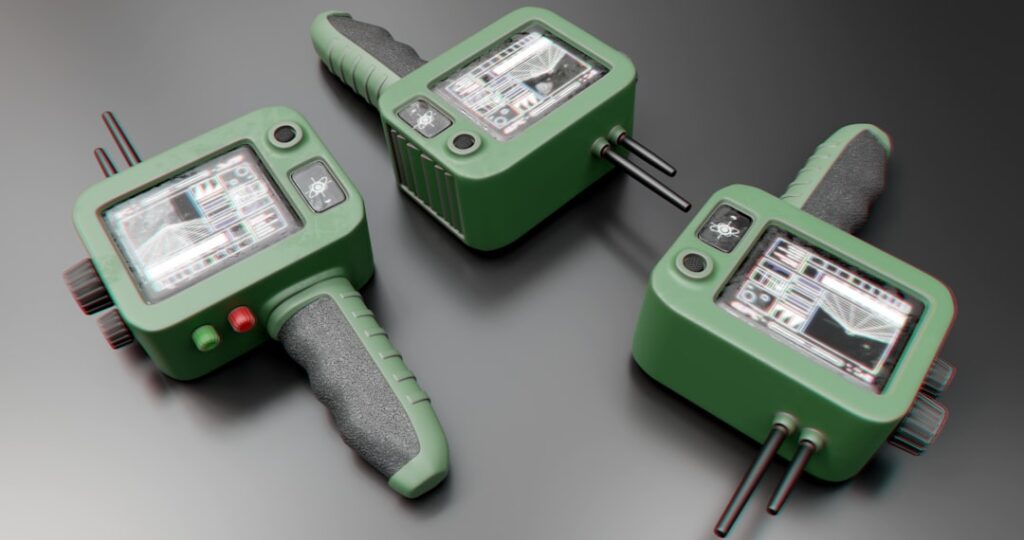
Shoppers searching for a mold detector device usually want a gadget that beeps when mold is present — and that is the first thing to understand: no consumer device detects mold directly. What is sold under that name measures conditions associated with mold, like humidity, moisture, or air particulates, rather than mold itself. Knowing the difference saves money and prevents false confidence. This guide summarizes EPA and CDC guidance current as of 2026 — consult a physician for symptoms and a certified professional for testing decisions.
Is this mold, asbestos, or water damage? Get a free instant screen
Upload a clear photo of the suspect area. You'll get an instant AI screening opinion and what to do next. This is screening guidance, not a professional determination.
Screening guidance only. AI can be wrong. Confirm asbestos, mold type, or lead with lab testing or a licensed professional before acting.
Is there a real mold detector device?
There is no consumer device that directly senses or identifies mold the way a smoke alarm senses smoke. Mold detection requires either visual inspection, smelling the characteristic musty odor, or collecting a physical sample and analyzing it in a lab. The devices marketed as “mold detectors” actually measure indirect indicators: relative humidity, surface or material moisture, or airborne particulate levels.
These measurements are genuinely useful for finding the conditions mold needs, which is often the practical goal. But a device reading “high humidity” is not the same as confirming mold exists. The EPA’s guidance is that if you can see or smell mold, you already know to clean it, and that sampling — when warranted — should be done with proper technique and lab analysis. Our mold inspection and testing hub explains where devices fit into a real assessment.
The marketing gap here is wide. Product listings lean on the word “detector” because it implies the certainty of a smoke or carbon-monoxide alarm, devices that sense a specific hazard and sound an alert. Mold has no equivalent because there is no single signal a sensor can lock onto — mold is a diverse group of organisms identified by sight or under a microscope, not by a gas or particle signature unique to it. Once you internalize that no consumer “mold alarm” exists, you can evaluate these products for what they genuinely offer: condition monitoring, not mold detection.
Why a smoke-alarm-style mold detector cannot exist
It is reasonable to wonder why technology that detects so many things cannot detect mold. The answer lies in what detection would require. A carbon-monoxide alarm works because CO is a single, specific molecule present at measurable concentrations when there is a hazard. Mold is not one thing — it is thousands of species, and its presence is normal in all indoor and outdoor air at low levels. There is no concentration threshold that cleanly separates “safe” from “dangerous,” which is precisely why no federal numeric standard for airborne mold exists.
Even the MVOC gases that produce a musty smell are a mix of compounds shared with other sources, so a sensor tuned to them cannot confirm mold specifically. Particle counters face the same wall: a mold spore is similar in size to pollen and dust, so counting particles cannot identify which are spores. Confirmation genuinely requires capturing a physical sample and examining it, which a wall-mounted gadget cannot do. The absence of a true mold detector is not a technology gap waiting to be filled; it reflects the nature of mold itself.
What “mold detectors” actually measure
The gadgets in this category fall into a few honest groups, each measuring something different.
Humidity monitors (hygrometers)
These read relative humidity in a room. Since mold thrives above 60 percent humidity, a hygrometer helps you keep a space in the CDC-recommended 30 to 50 percent range. Cheap and useful, but they detect conditions, not mold.
Moisture meters
A moisture meter reads the moisture content of building materials like drywall and wood. This is the single most useful tool for finding where mold is likely growing, because it reveals damp materials behind surfaces. Our guide on how to use a moisture meter covers technique.
Air quality / particulate monitors
These count airborne particles, sometimes labeled as detecting “spores.” They cannot distinguish mold spores from ordinary dust, pollen, or other particles, so a high reading does not confirm mold. Treat them as general air-quality indicators, not mold tests.
Why no device can confirm mold
Confirming mold requires identifying the organism, which means microscopy or culturing a sample in a lab. A handheld device cannot do that. The particulate sensors that claim to detect spores measure particle size and count, and mold spores overlap in size with countless harmless particles. That is why a “spore alarm” cannot tell you whether you have a mold problem.
This limitation is not a flaw to engineer around — it reflects what mold detection genuinely requires. The reliable confirmation methods remain visual inspection (you can often just see it), odor (the musty MVOC smell), and lab analysis of a sample. A device that finds high moisture points you to where to look, but your eyes, nose, and a lab do the confirming.
Which devices are actually worth buying?
For most homeowners, two inexpensive tools earn their place:
- A hygrometer ($10–$30): keeps you aware of room humidity so you can act before mold conditions develop.
- A pin-type or pinless moisture meter ($25–$80): finds damp materials and helps locate likely mold and the leaks feeding it.
A consumer-grade air particulate monitor is optional and easy to over-interpret. If you want actual mold identification, a lab-analyzed test kit (surface or air) is more meaningful than any electronic gadget, though even those have limits we cover in our look at whether at-home mold test kits work. Professionals add calibrated moisture meters and infrared cameras to find hidden dampness.
If you do want some electronic monitoring, a combined temperature-and-humidity monitor that logs readings over time is the most informative consumer choice. Watching how humidity rises and falls through the day and across seasons tells you when and where your home is most at risk, which is genuinely actionable. That kind of trend data beats a one-time particle reading that you cannot interpret with confidence.
How to use these tools effectively
Used well, simple devices help you stay ahead of mold. Keep a hygrometer in damp-prone rooms — the basement, a bathroom, a laundry area — and run a dehumidifier when readings climb above 50 percent. Use a moisture meter after any leak or flood to confirm materials have dried below the threshold mold needs, and to spot-check walls where you smell something musty.
If a moisture meter flags a damp wall with no obvious source, that is your cue to investigate further or call a professional with infrared imaging. The device does not find mold, but it finds the water that causes it, which is more actionable. Pair the readings with your senses: a musty smell plus a high moisture reading is a strong signal even without visible growth.
What professionals use that homeowners cannot replicate
Professional mold inspectors do use instruments, but they are calibrated tools paired with training, not consumer gadgets. Their moisture meters are calibrated for specific materials and read accurately across surfaces. Infrared cameras reveal temperature differences that indicate hidden moisture behind walls and ceilings — a genuinely powerful tool, but one that requires interpretation, since a cool spot can mean water or simply a draft or missing insulation.
For sampling, professionals use calibrated air pumps that draw a measured volume of air, take same-day outdoor control samples, and send everything to accredited labs for spore counting and species identification. They interpret the results in the context of the home’s conditions and the outdoor baseline. None of this is replicated by a $40 plug-in monitor. The value a professional adds is not just better equipment but the judgment to know where to look, what the readings mean, and how to connect moisture, odor, and growth into a coherent diagnosis. For an overview of how those tools fit into the inspection trade more broadly, see our guide to home inspection tools.
Spending your money wisely
If your goal is to manage mold risk at home, allocate your budget toward the tools and actions that actually move the needle. A $15 hygrometer and a $50 moisture meter give you real, actionable information about the conditions and dampness that cause mold. A dehumidifier — a larger purchase — does more to prevent mold than any sensor, by keeping humidity in the 30-to-50-percent range the CDC recommends.
What rarely justifies the cost is an expensive “smart” air monitor marketed as detecting mold or spores; the readings are easy to misinterpret and do not confirm a problem. And if you have a genuine concern — health symptoms, a real estate transaction, suspected hidden growth — the smartest spend is a professional assessment, not a gadget. Match the purchase to the question: monitoring tools for ongoing awareness, a dehumidifier for prevention, and a professional for confirmation when it matters. Putting forty dollars into a moisture meter and a hygrometer, plus the cost of a dehumidifier where one is needed, does more for a home’s mold risk than the priciest “mold detector” on the shelf — because those tools support the dryness that actually keeps mold from growing in the first place. The most effective “mold detector” a home can have is an attentive owner with a hygrometer, a moisture meter, and the habit of acting on what they reveal.
When to skip the gadgets and call a professional
Devices are a fine first line for monitoring and spot-checking, but they have clear limits. Call a professional when you smell mold but cannot find it, when a moisture meter shows persistent dampness you cannot trace, when growth exceeds about 10 square feet, or when health symptoms point to the home. Professionals confirm mold through proper sampling and lab analysis and locate hidden moisture with calibrated equipment.
The honest bottom line: buy a hygrometer and a moisture meter to manage conditions, but do not expect any device to announce “mold here.” Confirmation comes from your eyes, your nose, and a lab — and from a professional when the stakes are high.
Reframing the question helps. Instead of “what device detects mold,” ask “how do I keep my home dry enough that mold cannot grow.” That shift moves the focus from an impossible gadget to achievable actions: monitor humidity, find and dry damp materials, fix leaks fast, and ventilate moisture-prone rooms. The tools that support those actions — a hygrometer and a moisture meter — are cheap and genuinely useful. The mythical mold alarm is not, because it cannot exist. Spend on prevention and condition awareness, trust your senses for the obvious cases, and call a professional for the ambiguous or high-stakes ones. That combination protects a home far better than any single device claiming to sniff out mold. The marketing will keep promising a gadget that beeps at the first spore, but the genuinely useful tools have been the same humble ones all along: something to read humidity, something to find dampness, and the judgment to act on what they show you.
References
- Mold and Health — U.S. Environmental Protection Agency
- Mold Cleanup in Your Home — U.S. Environmental Protection Agency
- About Mold and Your Health — Centers for Disease Control and Prevention
- Mold and Indoor Air Quality — American Lung Association
If your moisture meter keeps flagging a damp wall you can’t explain, a vetted Front Range inspector can find the source with infrared imaging — get in touch through our contact page.