Detect Black Mold: What Homeowners Need to Know
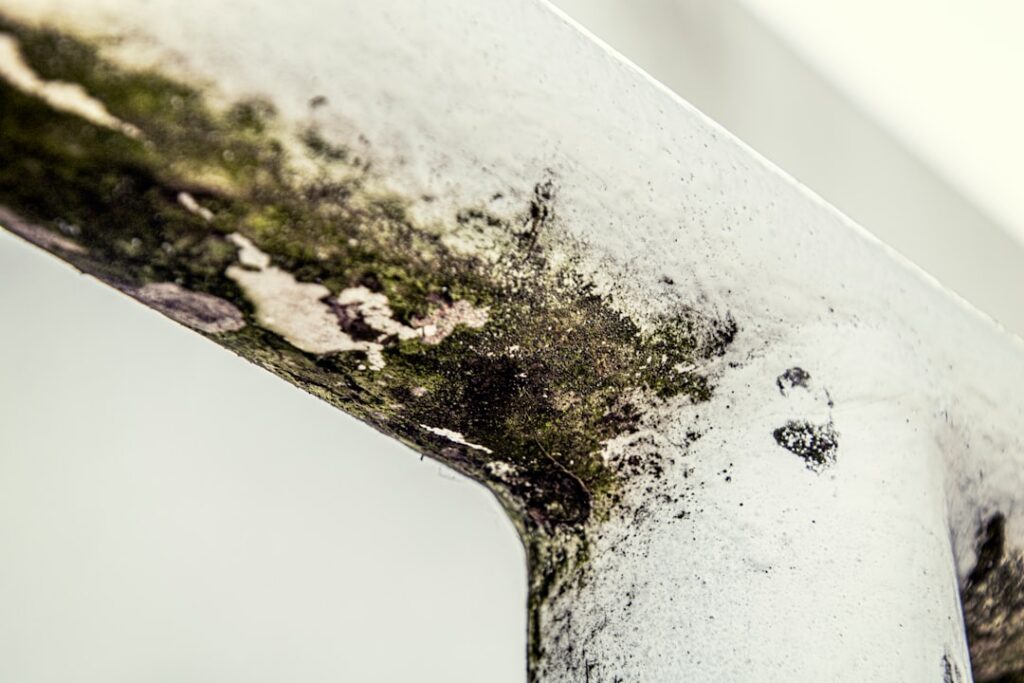
The term “black mold” usually points to Stachybotrys chartarum, a greenish-black fungus that grows on chronically wet, cellulose-rich materials like drywall, ceiling tile, and wood framing. Homeowners want to detect black mold early because it signals a moisture problem that has been running long enough to feed a slow-growing species. The good news is that the early clues are accessible to anyone: a musty smell, a visible stain, and a documented water history. This guide summarizes EPA and CDC guidance current as of 2026, and it is informational only — consult your physician about symptoms and a certified professional for testing and removal decisions.
Is this mold, asbestos, or water damage? Get a free instant screen
Upload a clear photo of the suspect area. You'll get an instant AI screening opinion and what to do next. This is screening guidance, not a professional determination.
Screening guidance only. AI can be wrong. Confirm asbestos, mold type, or lead with lab testing or a licensed professional before acting.
How to detect black mold in a home
Detection rests on three pillars that reinforce one another: what you see, what you smell, and what sampling confirms. No single sign is conclusive on its own. A dark stain might be soot or mineral residue, and a musty odor can drift from a crawlspace you never enter. When two or three of these signals line up in the same location, the case for active growth becomes much stronger and worth investigating closely.
Visual signs that point to black mold
Color alone does not identify a species, but several visual patterns are typical of chronic moisture growth. Look for these along baseboards, behind furniture pushed against exterior walls, around window frames, and beneath sinks.
Texture and spread pattern
Stachybotrys often appears slimy or wet when actively growing and powdery once it dries. It tends to spread in irregular patches rather than perfect circles, and on paper-faced drywall it can bleed into the surface rather than sitting cleanly on top. Growth that follows a water line — a horizontal band along a wall, for instance — strongly suggests a leak or flood origin behind the finish.
Where it hides
The visible patch is frequently the smallest part of the problem. Mold thrives on the cool, dark, paper backing of drywall, the underside of carpet padding, and the cavity side of insulation. A coin-sized stain on the painted face can correspond to a much larger colony inside the wall cavity, which is why probing the source matters more than measuring the spot you can see.
Using smell to detect black mold
A persistent earthy or musty odor is one of the most reliable early signals, often arriving before any stain becomes obvious. The smell comes from microbial volatile organic compounds released as the colony metabolizes. If a room smells musty when the door has been closed, or if the odor intensifies after rain or when the HVAC runs, treat it as a prompt to inspect rather than to mask with air freshener.
Tracing odor to a source
Odor travels, so the strongest smell is not always above the growth. Check low points and enclosed spaces: under-sink cabinets, the back of closets on exterior walls, basement corners, and the return-air side of the furnace. Removing a switch plate or outlet cover on a suspect wall sometimes lets the cavity air — and its smell — reach your nose directly.
Checking the water history
Mold needs sustained moisture, so a credible detection effort always reviews where water has been. Past roof leaks, plumbing failures, ice dams, basement seepage, and overflowed appliances all leave a record. Water stains on ceilings, rippled baseboards, efflorescence on basement walls, and warped flooring are durable evidence that moisture lingered long enough to support growth even after the surface dried.
Humidity as a contributing factor
Even without a discrete leak, indoor relative humidity above roughly 60 percent can sustain mold on cool surfaces. Bathrooms without exhaust fans, finished basements, and rooms with poor air movement are common trouble spots. An inexpensive hygrometer helps you confirm whether ambient moisture, rather than a single leak, is feeding the problem.
Surface sampling to confirm
When a visible patch needs identification, surface sampling is the direct route. A tape-lift or swab sample is pressed to the growth, then analyzed under a microscope at a laboratory to identify the genera present. Surface sampling answers the question “what is this patch” rather than “how much is in the air,” and it is the appropriate tool when you can see the suspect material.
Tape-lift versus swab
A tape-lift captures spores and structures from a dry surface with minimal disturbance and preserves how they were arranged. A swab covers a larger or textured area and works on damp material. Either way, the lab reports the mold types found, and a result naming Stachybotrys confirms the “black mold” the household was worried about.
Air sampling for hidden growth
When growth is suspected behind walls or in a cavity you cannot open, air sampling measures the spore load in the breathing zone. A spore-trap cassette pulls a fixed air volume across a sticky slide, which the lab then counts. The most useful interpretation compares an indoor sample to an outdoor baseline taken the same day, since outdoor air sets the natural background that indoor counts should not greatly exceed.
Reading the indoor-outdoor comparison
If indoor spore counts of a moisture-loving genus run well above the outdoor reading, the data points to an indoor amplification source even when nothing is visible. A professional assessor interprets these numbers alongside the building inspection rather than relying on a single count, because one snapshot can be skewed by recent cleaning, foot traffic, or HVAC cycling.
Common places black mold develops
Knowing the usual locations narrows the search dramatically, because black mold concentrates wherever water collects and stays. Each spot has a characteristic moisture source worth checking directly rather than guessing.
Basements and crawlspaces
Below-grade spaces combine cool surfaces, limited airflow, and groundwater pressure, which makes them the most common home for chronic growth. Check the base of foundation walls, the rim joist, and any storage pressed against concrete. Efflorescence — a white mineral crust — signals water moving through the wall and is a reliable companion to growth.
Bathrooms and laundry areas
Steam, splashing, and infrequent ventilation keep these rooms damp. Look behind the toilet tank, under the vanity, at the ceiling above the shower, and around the washing-machine connections. A bathroom without a working exhaust fan is a frequent starting point for a colony that later spreads into adjacent walls.
Around windows and exterior walls
Cold exterior surfaces invite condensation in heating season, and failed window seals let water wick into the frame and sill. Pull back curtains and check the lower corners of window frames, where moisture pools and growth often appears first.
Tools that help with detection
A few inexpensive tools make a homeowner’s search more reliable than sight and smell alone. A moisture meter reads the dampness of building materials, revealing wet drywall or framing behind a dry-looking surface. A hygrometer tracks room humidity over time. A bright flashlight held at a low angle across a wall exposes texture and staining that flat lighting hides. None of these confirms a species, but they point the search toward the materials most likely to harbor growth.
What black mold is not
Plenty of dark stains get mistaken for black mold, and chasing the wrong target wastes effort. Soot from candles or a furnace, mineral deposits from hard water, dried adhesive residue, and ordinary dirt in textured surfaces all read as “black mold” at a glance. The distinguishing features are texture, smell, and association with moisture: real growth often has a slightly raised or fuzzy texture, frequently carries a musty odor, and appears where water has been. When the call is genuinely unclear, a tape-lift sample analyzed at a lab settles it without guesswork.
When to bring in a professional
Small, clearly visible growth on a hard surface is often within a homeowner’s reach, but several conditions warrant a certified assessor. Persistent musty odor with no visible source, suspected growth inside walls, an area larger than about ten square feet, or growth in HVAC equipment all justify professional evaluation. An assessor who only inspects and samples — and does not also bid the remediation — avoids the conflict of interest that comes with diagnosing and selling the cure at once. For an overview of how testing fits into the larger picture, the mold inspection and testing hub walks through the full sequence, and the companion guide on how to find mold in a house covers the hands-on search in detail.
What a professional adds
Beyond calibrated equipment, an experienced assessor brings pattern recognition: knowing that a stain in one spot usually means a leak somewhere else, and knowing which cavities to open. They collect the matching outdoor air sample, interpret the lab data against the building’s condition, and document the extent in a way that supports a remediation scope or an insurance claim. That judgment is the part hardest to replicate at home.
The health angle and why early detection matters
Detecting black mold early is not only about protecting building materials; it limits how long occupants breathe elevated spore levels. CDC and EPA note that mold exposure can cause nasal congestion, throat and eye irritation, coughing, and asthma flare-ups, with stronger effects in people who have allergies, asthma, or weakened immune systems. Reactions vary widely from person to person, and this is general information rather than medical advice — anyone with symptoms should consult a physician. The practical point is that a colony found at the stain-and-smell stage is smaller, cheaper, and less disruptive to address than one discovered after months of hidden spread.
Why slow-growing species signal a long problem
Because Stachybotrys grows slowly and needs sustained wetness, finding it usually means the moisture has been present for weeks or longer. That is useful diagnostic information: it tells you to look for a chronic source — a long-running leak, persistent condensation, or basement seepage — rather than a one-time spill. Treating the find as evidence of an ongoing water problem leads you to the real cause faster than focusing on the visible patch alone.
A practical detection walkthrough
A homeowner can run an orderly check without special training. Start by closing up the house for a few hours so odors are not diluted by fresh air, then move room to room with a bright flashlight.
Step through the high-risk rooms
Begin in the bathroom, checking the ceiling over the shower, grout, and under the vanity. Move to the kitchen and laundry, looking under sinks and behind appliances. Descend to the basement to inspect the base of foundation walls and the rim joist. Finish at windows and exterior-wall corners, where condensation collects.
Note, photograph, and decide
Record each musty spot and each stain with a dated photo, and check suspect materials with a moisture meter if you have one. Where signs converge — odor, staining, and high moisture in the same place — you have likely found active growth and can decide whether to clean a small patch yourself or sample and call a professional for anything larger or hidden.
References
- Mold Cleanup in Your Home — U.S. Environmental Protection Agency
- About Mold and Your Health — Centers for Disease Control and Prevention
- A Brief Guide to Mold, Moisture and Your Home — U.S. Environmental Protection Agency
Front Range homeowners who suspect black mold and want an unbiased inspection before committing to removal can connect with a vetted local inspector through our contact page.